Yes, air purifiers can meaningfully reduce cat litter odour, but only when they pair a substantial activated carbon stage with a true HEPA filter. HEPA alone captures dust and dander, not ammonia gas. Purifiers are a secondary layer, never a substitute for regular scooping, and Some stores stock units and replacement filters built for exactly this job.
TL;DR:
- Only air purifiers with both a large activated carbon bed of 200 grams or more and true HEPA filtration effectively reduce cat litter odour.
- Proper placement within one to two meters of the litter box and continuous operation on low speed maximize odour control.
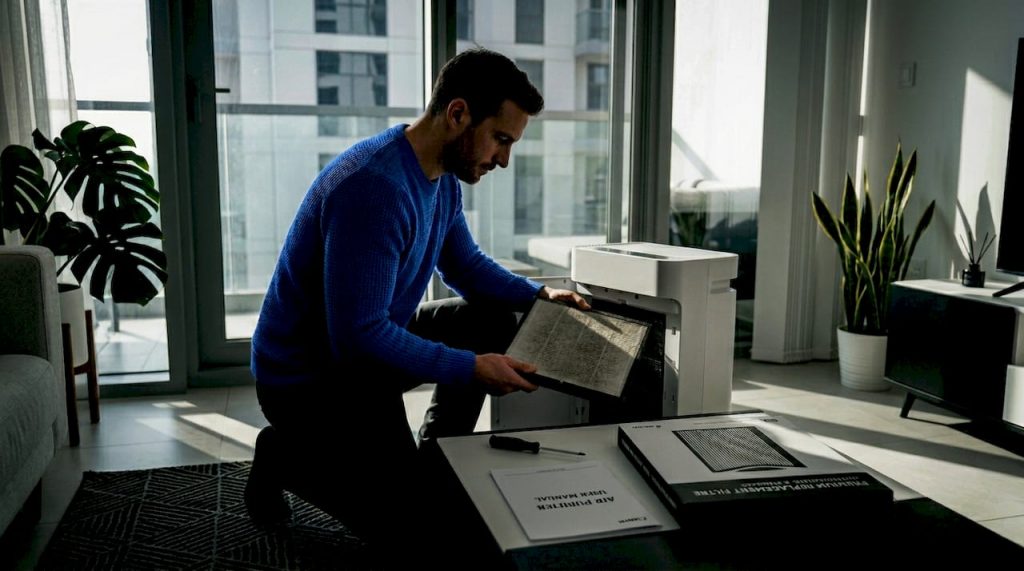
- Regular filter replacement, especially the carbon stage, is essential because saturation produces smell and reduced airflow, with no visual cues.
- Purifiers with a high Clean Air Delivery Rate are necessary for larger rooms or open-plan spaces, potentially requiring multiple units for full coverage.
- Avoid relying on HEPA-only units or ozone generators, and always verify that a purifier clearly states carbon weight and offers accessible replacement filters.
Table of Contents
- How air purifiers reduce litter-box odour
- How to choose an air purifier specifically for cat litter odour
- Placement and operating best practice for maximum odour control
- Filter replacement and signals that carbon is spent
- Limits, safety and common misconceptions
- Types of cat litter designed for odour control
- Best practices for litter box cleaning frequency and methods
- Effect of litter box type and number on odour control
- Use of deodorisers and additives in cat litter
- Ventilation and environmental factors affecting odour dispersion
- Behavioural tips to encourage cats to use litter boxes properly
- Publisher perspective: why ClimatePro recommends a layered approach
- Finding the right ClimatePro purifier for litter odour
- Sources
How air purifiers reduce litter-box odour
Cat litter odour is mostly gas, not dust. Ammonia and volatile organic compounds (VOCs) rising from urine and faeces are what you actually smell, and HEPA filters cannot touch them. A HEPA filter paired with activated carbon is the configuration experts recommend for litter odour, because HEPA traps the particles while carbon adsorbs the gas.
The catch is that not all carbon does the job. Thin carbon-coated sheets, common in budget purifiers, saturate within days in an odour-heavy room. Carbon bed size and contact time determine whether a purifier actually controls odour, or just filters dust while the smell lingers regardless.
Airflow matters just as much as carbon mass. A purifier’s Clean Air Delivery Rate (CADR) has to be strong enough to pull air through a dense carbon bed without stalling, which is why heavier carbon beds need a proportionally stronger fan behind them.
- HEPA captures dander, litter dust and airborne particles, not gas.
- Activated carbon adsorbs ammonia and VOCs but has a finite, saturating capacity.
- CADR and fan strength decide how much air actually contacts the carbon per hour.
- Independent testing of purifiers for pet homes consistently favours units with both stages over HEPA-only designs.
Pro Tip: If a purifier’s marketing only mentions “odour reduction” without naming a carbon weight in grams, assume the carbon layer is a thin cosmetic sheet, not a real adsorption bed.
How to choose an air purifier specifically for cat litter odour
Buying for litter odour is a different exercise to buying for general dust. You’re shopping for gas adsorption capacity first, particle filtration second.
- Confirm a substantial carbon bed. Pellet-based carbon beds weighing 200 grams or more outperform thin carbon-sheet designs in continuous odour scenarios, and they need a correspondingly stronger fan to keep air moving through them.
- Check for true HEPA, ideally H13. This grade traps fine dander and litter dust that a basic “HEPA-type” filter lets through.
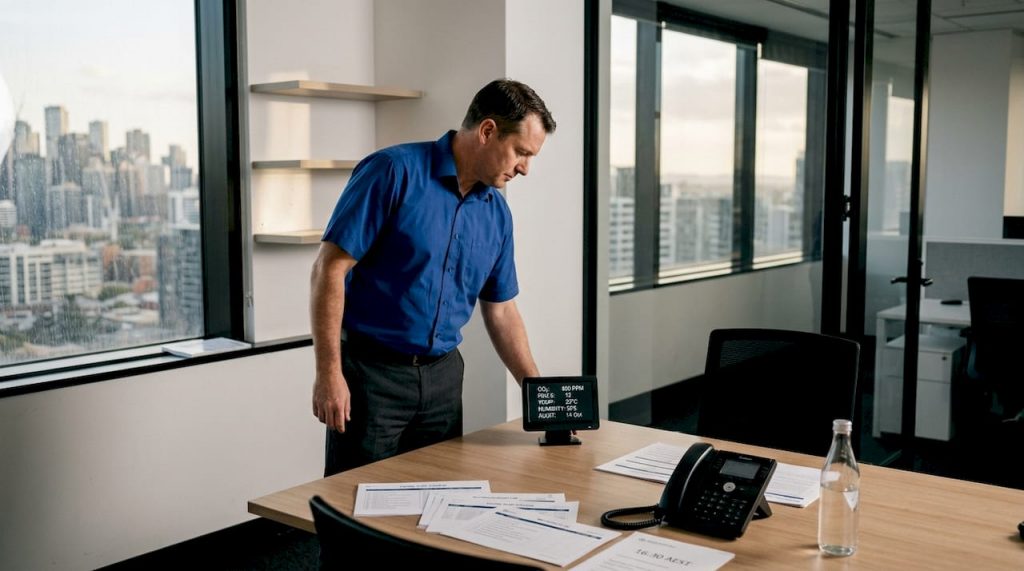
- Match CADR to room size. As a rule of thumb, aim for enough CADR to cycle the room’s air multiple times per hour; a small ensuite laundry needs far less airflow than an open-plan living area with a litter station in the corner.
- Prioritise replaceable, accessible filter media. If changing the carbon stage requires tools or a trip to a specialist, you’ll delay replacements and let odour build back up.
- Look for manual fan control over auto-only sensors. Sensor-driven auto modes can be tripped up by pet dust and litter granules, triggering odd speed changes rather than steady performance.
Watch for red flags too. HEPA-only units marketed vaguely as “pet friendly” rarely have any real carbon stage. Ozone generators and ionisers marketed as odour solutions are best avoided around pets and people. And any unit that doesn’t list a carbon weight or replacement schedule is one you should question before buying.
Placement and operating best practice for maximum odour control
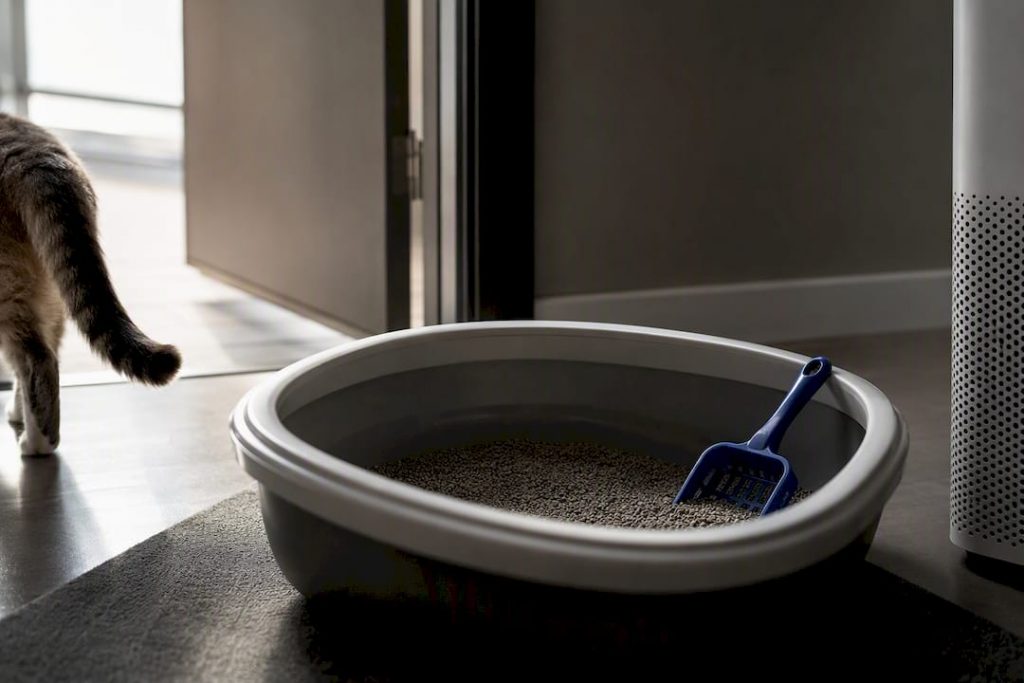
Where you put the purifier changes how well it works almost as much as the unit itself. Placement near the litter box improves capture efficiency because it intercepts odour before it disperses through the room.
- Position the unit within one to two metres of the litter box, with the intake facing the box and nothing blocking airflow.
- Run it continuously on low rather than switching it on and off; low, steady airflow gives carbon more contact time without pushing noise levels up.
- Bump the fan to high for 15 to 20 minutes after scooping, when odour release peaks.
- In small enclosed rooms like laundries or ensuites, a compact unit with modest CADR can still perform well because the space is easy to cycle.
- In open-plan apartments or living areas, undersized units struggle; either upsize the CADR or add a second unit closer to the box itself.
If odour persists despite correct placement, the fix is usually a bigger carbon bed or stronger airflow, not a second cheap unit stacked beside the first.
Filter replacement and signals that carbon is spent
Carbon doesn’t fade visibly the way a dusty pre-filter does, which is exactly why so many owners miss the point of replacement. Activated carbon adsorbs VOCs and odours but saturates over time without any obvious visual cue, so you can’t just eyeball it.
- Treat manufacturer-recommended intervals as a starting point, then shorten them for a litter-box environment.
- The clearest sign carbon is spent is the smell returning, even though the box was scooped recently.
- Reduced airflow from the unit can also indicate a clogged pre-filter stage sitting ahead of the carbon.
- Budget for filter replacement as an ongoing cost of ownership, not a one-off purchase.
Carbon saturation has no visual cue, so the smell test is genuinely the most reliable signal available to a household running the unit daily. Households with multiple cats or a single litter box for several animals should expect to replace carbon noticeably sooner than the standard interval suggests.
Limits, safety and common misconceptions
A purifier does not remove waste. Scooping daily and cleaning the box remain the actual source control, with the purifier managing what’s left in the air afterwards. HEPA-only units, no matter how well marketed, will not remove ammonia or most litter-related VOCs, since particle filters and gas adsorption are separate jobs entirely.
Avoid ozone-generating devices near pets. Purina’s guidance also cautions against heavily perfumed litter additives and sprays, which can irritate a cat’s respiratory system even when they smell pleasant to people. If odour persists despite a decent purifier and a clean box, check ventilation in the room or consider whether the smell points to a health issue with the cat rather than an air-quality gap.
Types of cat litter designed for odour control
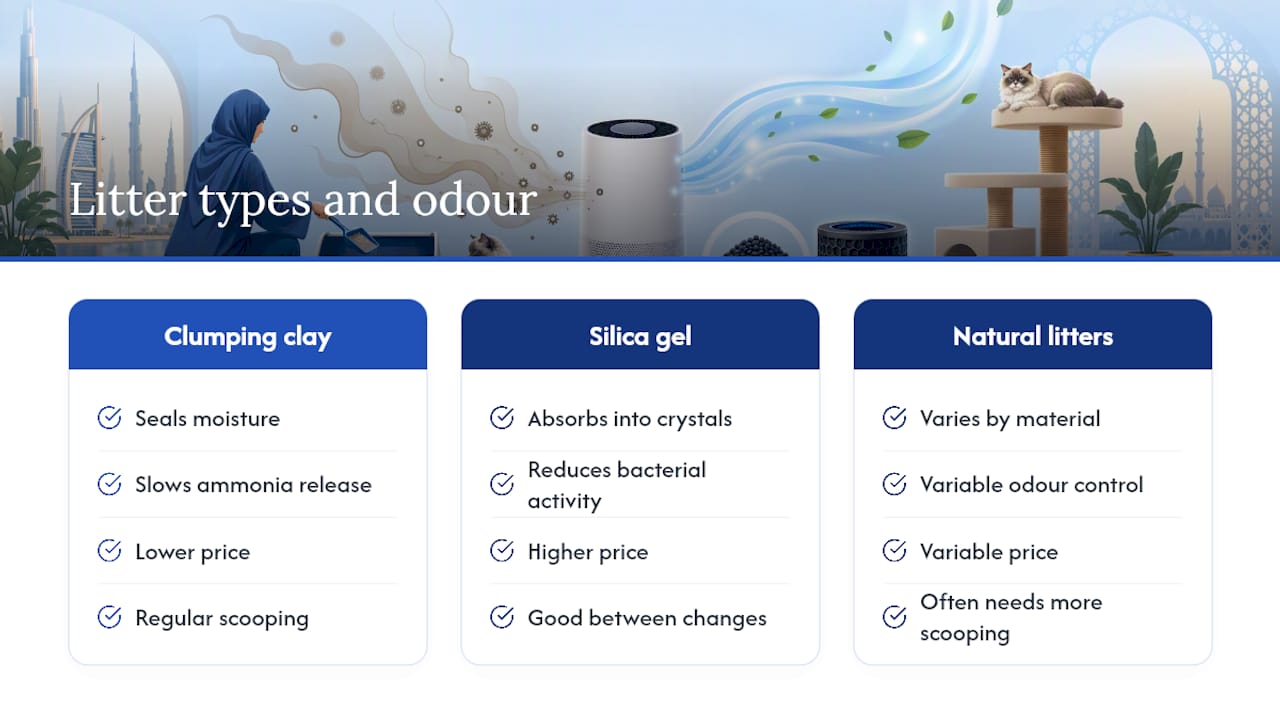
The litter itself sets the baseline the purifier has to work against. Clumping clay litters seal moisture into tight clusters, which limits the surface area exposed to air and slows ammonia release compared with non-clumping types.
Silica gel litters absorb moisture directly into the crystal structure, drying waste faster and cutting the bacterial activity that produces much of the sharp ammonia smell. They tend to control odour well between full changes, though they carry a higher price per bag than clay.
Natural and biodegradable litters, made from materials like corn, wheat, or recycled paper, vary more widely in odour performance. Some perform close to clay, others need more frequent scooping to stay on top of smell. None of these litter types eliminate the need for an activated carbon purifier; they simply change how much odour load reaches the air the purifier has to clean.
Best practices for litter box cleaning frequency and methods
Scoop solids at least once daily, twice if you have more than one cat sharing a box. Waste left sitting for 24 hours or longer is when ammonia production accelerates and odour becomes noticeable beyond the immediate area.
A full litter change, including washing the tray with mild soap and water, should happen every one to four weeks depending on litter type and household size. Clumping clay generally needs a full change less often than non-clumping litters, since spent clumps are removed individually along the way.
Avoid strong chemical cleaners on the tray itself. Bleach and ammonia-based products can leave a residual smell cats find unpleasant, sometimes discouraging them from using the box at all, which only compounds the odour problem you’re trying to solve.
Effect of litter box type and number on odour control
The general guideline among behaviourists is one litter box per cat, plus one extra. A single household cat sharing one box with no spare tends to produce a more concentrated odour zone, since waste accumulates in one place with no dilution across boxes.
Covered boxes trap odour inside rather than eliminating it, often making the box itself smell stronger when opened, even if the surrounding room seems fresher. Open trays release odour more readily into the room, which is actually where a well-placed purifier does its most useful work.
Self-cleaning or automatic litter boxes reduce the time waste sits exposed to air, which cuts down on the odour source itself. They’re a genuine complement to a purifier setup, not a replacement for one, since they still leave waste in a holding compartment that needs regular emptying.
Use of deodorisers and additives in cat litter
Baking soda and activated-carbon-based additives mixed into litter can reduce surface odour between full changes, working similarly to the carbon stage inside a purifier by adsorbing some of the gas at the source.
Heavily scented litters and sprays are worth approaching with caution. Cats have a far more sensitive sense of smell than people, and strong perfumes near the litter area can discourage some cats from using the box, which ultimately increases odour problems rather than solving them.
Any additive is working alongside the room’s air quality, not instead of it. A purifier with real carbon capacity handles what deodorised litter can’t catch once ammonia becomes airborne.
Ventilation and environmental factors affecting odour dispersion
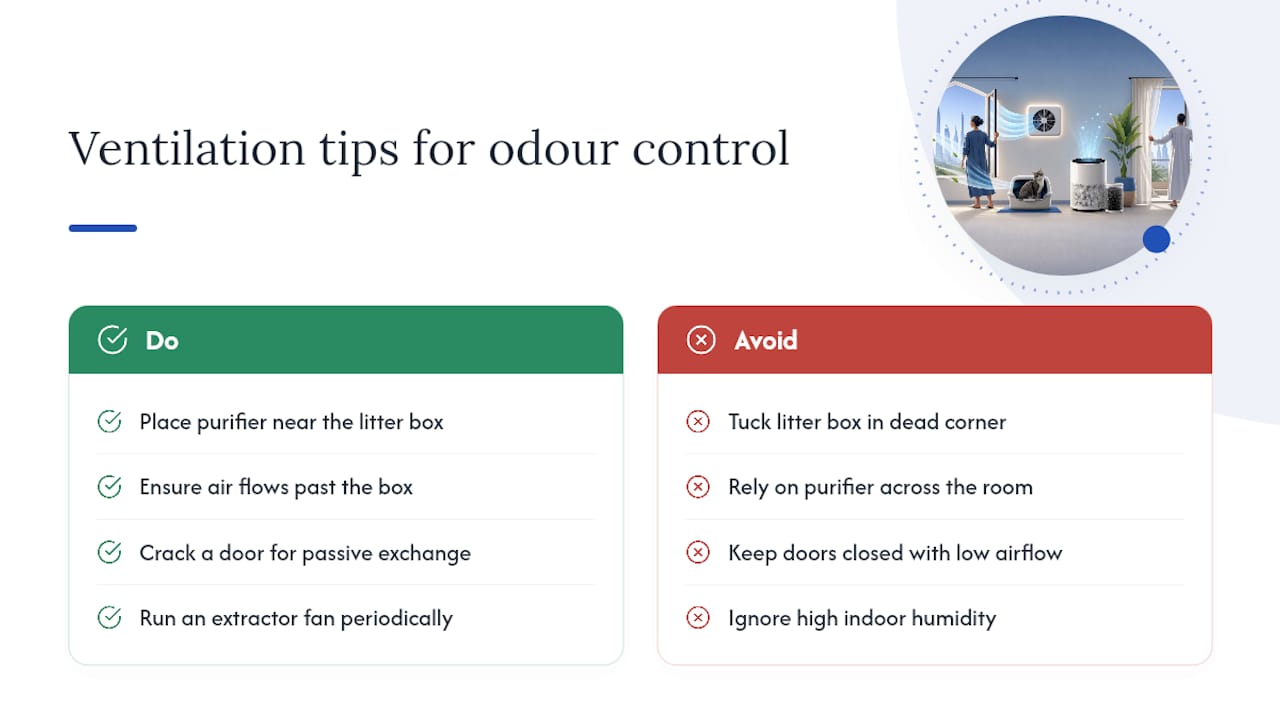
Airflow in the room shapes how odour spreads and how effectively a purifier can pull it in. A litter box tucked into a poorly ventilated corner, with no air movement past it, tends to build up a concentrated pocket of smell that a purifier positioned across the room won’t reach efficiently.
Humidity plays a role too. Higher indoor humidity slows moisture evaporation from waste, which can extend the time ammonia stays concentrated near the box rather than dispersing and diluting. In humid climates, a dehumidifier running alongside a purifier can noticeably improve how quickly odour clears from a small room.
Closed doors and low natural airflow in apartment laundries or ensuites make the purifier’s job harder, since there’s less passive air exchange helping dilute odour between cleaning cycles. Cracking a door or running an extractor fan periodically gives the purifier cleaner air to recirculate.
Behavioural tips to encourage cats to use litter boxes properly
Cats that avoid the box due to stress, an unfamiliar location, or a dirty tray will urinate or defecate elsewhere, creating odour sources a purifier can’t target because they’re not anywhere near the intended clean zone.
Keep the box in a quiet, low-traffic spot away from loud appliances or the cat’s food and water. Cats are reluctant to toilet near where they eat, and a startling noise near the box can put them off returning to it.
Consistency matters more than most owners expect. Changing litter type or box style suddenly can trigger avoidance, so introduce changes gradually and keep at least one box using the previous litter until the cat has adjusted.
Publisher perspective: why ClimatePro recommends a layered approach
The mistake most households make isn’t skipping a purifier, it’s expecting a HEPA-only unit to do a job it was never built for. Odour is a gas problem, and gas needs carbon, not just a fine mesh. The recommended position is straightforward: pair genuine source control, meaning consistent scooping and a suitable litter, with a purifier carrying a real carbon bed and H13 HEPA. Readers wanting more on filtration choices can browse the odour control resource on the ClimatePro blog, covering delivery to homes across the emirates.
— Nevel
Finding the right ClimatePro purifier for litter odour
Choosing an informed supplier is the practical starting point for pet households in the UAE looking to fix litter odour properly, rather than masking it. Instead of guessing between generic models, the selection path is simple: pick a unit sized to your room, confirm it carries a genuine carbon bed alongside true HEPA, and check that replacement filters are readily available before purchase.

Start with the Levoit Core P350 Pet Care air purifier for smaller rooms and laundries, or the Levoit Vital 100S Pet Care smart purifier for larger living spaces needing stronger CADR. For households wanting a broader household option with a solid carbon stage, the Honeywell Air Touch P2 at AED 705 covers mid-sized rooms comfortably. Once you’ve settled on a unit, budget ahead for the carbon replacement filter so odour control doesn’t quietly lapse a few months in. Browse the full air purifier range to compare sizing and filter options before you check out.
Sources
For deeper filtration science, RTINGS’ pet purifier testing covers real-world performance across dozens of units. HomeAirQualityLab’s carbon filter breakdown and AirPurifierLabs’ filtration stage guide explain the mechanics behind carbon saturation and maintenance timing.
- Rtings
- Homeairqualitylab
- Air purifier filtration stages explained — AirPurifierLabs
- Activated carbon filter vs HEPA: Do you need both in an air purifier — Linea