
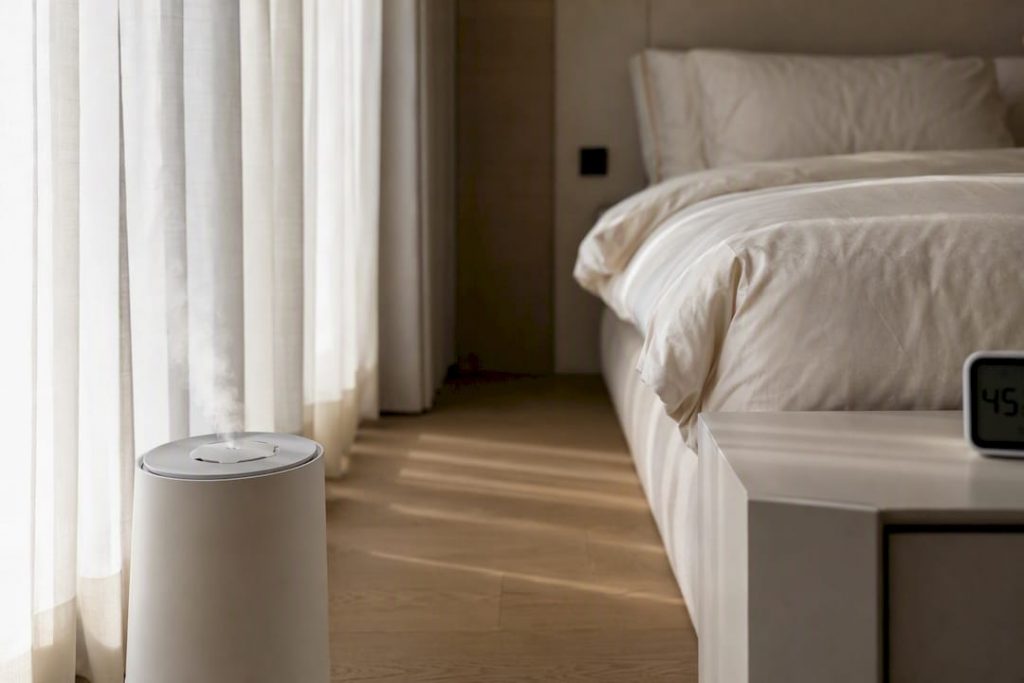
Keep your bedroom’s relative humidity in a moderate range, checked first thing in the morning. That range keeps airways comfortable, limits dust-mite and mould growth, and supports the temperature drop your body needs for deep sleep. If your hygrometer reads outside 30–60% for several nights running, adjust ventilation or add a humidifier or dehumidifier before the problem settles into your walls, bedding, or breathing.
TL;DR:
- Maintaining bedroom humidity between 40% and 50% optimizes comfort while minimizing mould and dust-mite growth, especially at night.
- During winter, lowering the target to 30% to 40% helps prevent condensation on cold windows, with a maximum safe ceiling below 60%.
- Using a hygrometer at bed height and monitoring morning readings ensure accurate humidity control before adjusting ventilation or devices.
- Ventilation by leaving the bedroom door slightly open reduces humidity faster than appliances alone, and devices should match room needs precisely.
- Humidity above 60% increases health risks by promoting mould growth, while below 30% can cause airway irritation and dehydration.
Table of Contents
- What is the ideal bedroom humidity range?
- How does humidity affect your sleep quality?
- How do you measure bedroom humidity correctly?
- What are the best ways to control bedroom humidity?
- When does bedroom humidity become a health risk?
- Quick checklist: your target settings for tonight
- How does bedroom humidity affect allergies, asthma, and respiratory infections?
- A practical view on getting this right
- Get your bedroom humidity right with the right equipment
- Sources
What is the ideal bedroom humidity range?
Two figures dominate this topic, and they are not actually in conflict. The EPA points to 30% to 50% as the band that limits mould and dust-mite activity indoors, while ASHRAE and several sleep-focused reviews cite a slightly broader 40% to 60% as comfortable for most people. The overlap, 40% to 50%, is where both comfort and biological safety line up, and it is the number worth aiming for on a normal night.
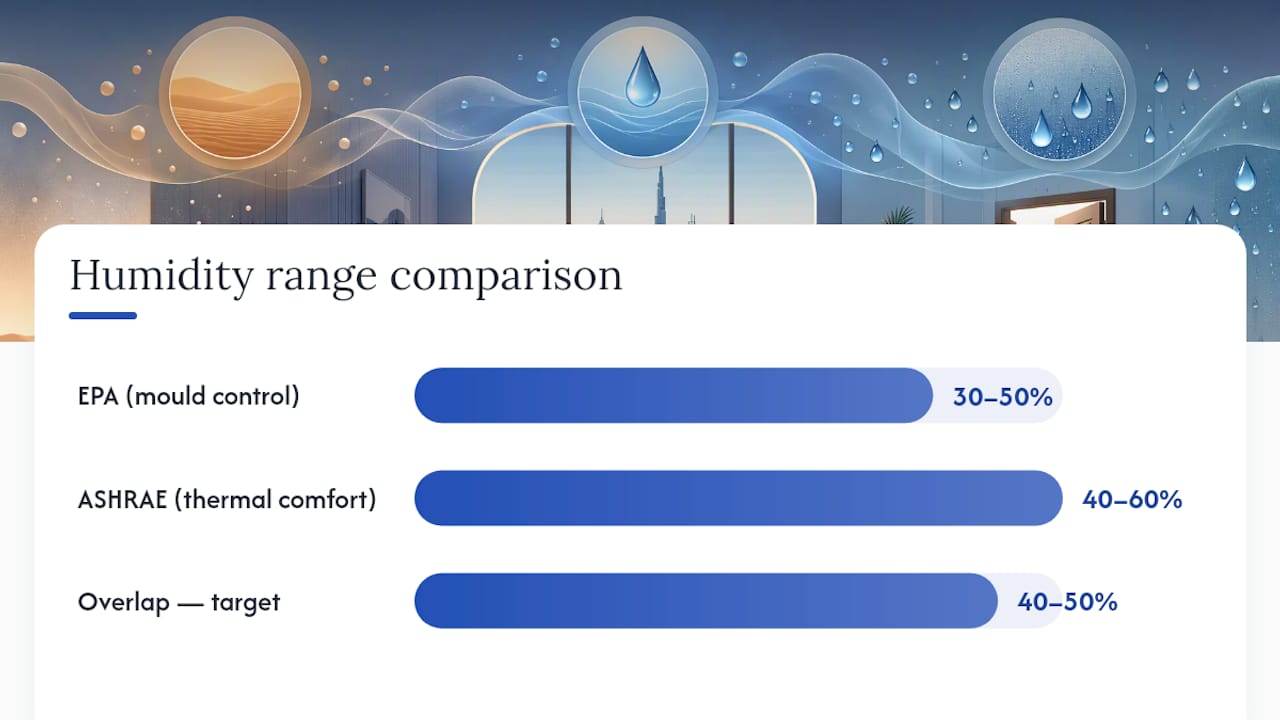
The gap between the two bands comes down to what each is optimising for. The EPA’s figure is a biological ceiling, the level above which mould spores and dust mites start thriving on cool surfaces. ASHRAE’s range leans more toward thermal comfort, since air that is too dry can feel colder than it is and irritate skin and sinuses. Splitting the difference gives you a target that protects against both problems at once.
Winter changes the calculation. When outside temperatures drop, windows and external walls run cooler than the rest of the room, and any air holding more than around 40% relative humidity can condense on that cold glass overnight. A practical bedroom humidity guide recommends dropping your target toward 30–40% in these conditions specifically to stop that condensation cycle before it starts.
Where the numbers land in practice:
- Year-round comfort target: 40% to 50% relative humidity
- Cold-window winter target: 30% to 40%, to avoid condensation
- Absolute safe ceiling: below 60%, to limit mould and dust-mite growth
- Absolute floor for comfort: above 30%, to avoid dry-air irritation
One nuance worth remembering: these figures describe the room at rest, with people sleeping in it. Set your device or thermostat for the empty room slightly below your target, because bodies release moisture overnight and will push the reading up by morning.
How does humidity affect your sleep quality?
Humidity changes how your body regulates temperature and how your airways feel, and both factors decide whether you wake up rested or groggy. Air on the dry end of the scale strips moisture from your nasal passages and throat, which is why you sometimes wake at 3 a.m. with a scratchy throat or a dry mouth even when the room feels a comfortable temperature.
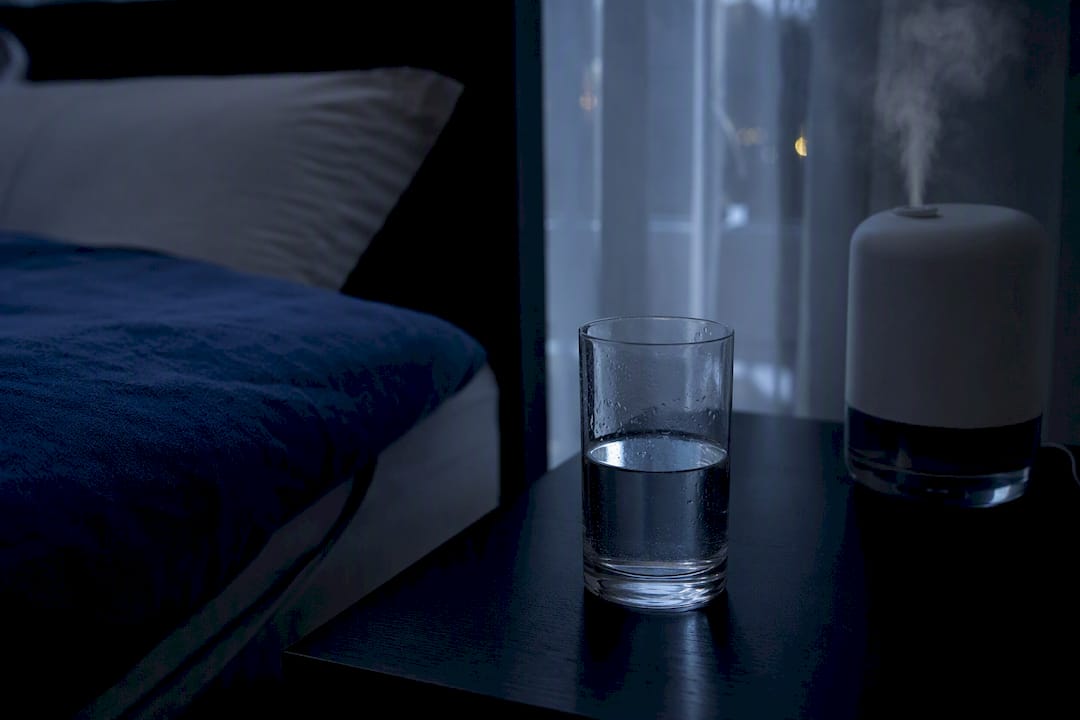
At the other extreme, humid air interferes with evaporative cooling, the process your skin relies on to shed heat while you sleep. When the air is already saturated, sweat cannot evaporate efficiently, so you feel hotter than the thermostat suggests and shift positions more often trying to cool down. A review of indoor environmental factors found that both very dry and overly humid conditions increase wake episodes during the night, compared with rooms held in the mid-range.
There is a third mechanism that matters just as much, particularly if you or a partner deals with allergies. Elevated humidity accelerates the growth of dust mites and mould, both of which trigger nighttime congestion, sneezing, and disrupted breathing. The National Asthma Council Australia lists humidity control among the most effective non-drug measures for managing these allergens, precisely because it addresses the source rather than the symptom.
Put together, the physiology explains why the 40–50% window keeps coming up. It is narrow enough to avoid the dryness that irritates your throat, but low enough to keep the allergen load down and let your body actually cool itself when it needs to.
How do you measure bedroom humidity correctly?
A cheap digital hygrometer is the only reliable way to know your actual numbers. Guessing by feel is inaccurate. Air that feels “stuffy” can read anywhere from 45% to 70%, and there is no way to tell without a device.
- Place the hygrometer at bed height, roughly a metre off the floor, away from windows, doors, and any air-conditioning vent, since those spots read artificially low or high.
- Take your main reading at around 7 a.m., not at bedtime. Sleep Foundation guidance on bedroom humidity notes that occupants add moisture to the air overnight through breathing and skin, so an empty-room reading at 10 p.m. will always understate what the room reaches by morning.
- Run a three-night check before making any changes. Note the morning number each day, and flag anything unusual: condensation on the window, a musty smell on waking, or bedding that feels damp to the touch.
What are the best ways to control bedroom humidity?
Ventilation is almost always the cheapest fix, and it works faster than most people expect. A practical ventilation guide found that leaving the bedroom door slightly ajar overnight, rather than sealed shut, can cut morning humidity readings by 10 to 20 percentage points in a typical room. That single habit solves a surprising number of humid-bedroom complaints before any appliance gets involved.
When ventilation is not enough, the right device depends on which direction your readings are off:
- Humidifiers suit rooms running consistently below 40%, common in air-conditioned UAE apartments during summer. Choose one with a built-in humidistat so it shuts off automatically near your target, and clean the tank every few days. Stagnant water in an uncleaned humidifier can grow bacteria and mould, which then gets aerosolised straight into the air you breathe overnight.
- Dehumidifiers or air conditioning suit rooms running above 55–60%, particularly during humid coastal months. A dehumidifier is more energy-efficient than running AC purely to dry the air, since AC is built primarily for temperature, not moisture removal; see practical insights on residential air-conditioning for humidity control in this residential AC guide.
- No-cost measures include running the bathroom extractor fan during and after showers, and never drying laundry inside the bedroom, both of which the National Asthma Council lists among the simplest ways to cut indoor moisture at the source.
Bedding matters more than most people assume. Mattresses built around ventilated coil layers breathe better and retain less moisture than compact all-foam cores, which makes a genuine difference if you sleep hot or live somewhere humid year-round.
Pro Tip: Set any humidifier’s target 5 percentage points below your ideal reading. Your body adds moisture as you sleep, so a device calibrated for the empty room usually lands closer to correct by morning.
For apartment-specific fixes, this guide to reducing humidity in a Dubai apartment covers the building-specific quirks worth knowing before you buy anything.
When does bedroom humidity become a health risk?
Two thresholds matter more than the rest. Sustained relative humidity above roughly 60% is the point where mould and dust mites begin proliferating on cool surfaces like skirting boards and window frames. Persistent condensation, meaning fogged windows every morning rather than just on the coldest night of the year, is the visible warning sign that usually shows up first.
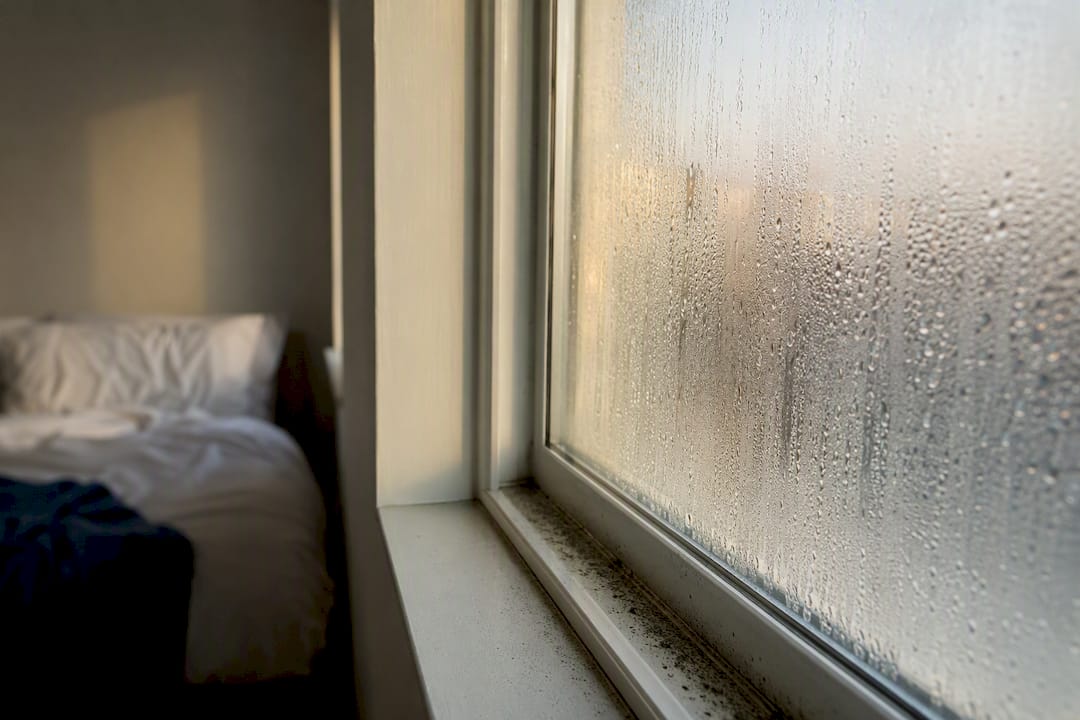
Watch for a musty smell on waking, damp patches on walls or ceiling corners, and window fogging that does not clear by mid-morning. Any one of these on its own is worth investigating; two or more together warrant faster action.
If damp patches or mould spots are already visible on walls or fabric, that has moved beyond a humidity-adjustment problem, and it is worth bringing in a professional to check for a leak or structural moisture source rather than treating the symptom alone.
Quick checklist: your target settings for tonight
- Year-round target: 40% to 50% relative humidity
- Winter or cold-window target: 30% to 40%
- Tonight: check your hygrometer reading now, not at bedtime
- Tonight: crack the bedroom door open if the room feels stuffy or reads high
- Tonight: run a humidifier or dehumidifier only if you’re already outside 30–60%
- This week: log the 7 a.m. reading for three consecutive mornings before changing anything further
How does bedroom humidity affect allergies, asthma, and respiratory infections?
Humidity outside the comfortable range does not just disrupt sleep. It actively worsens three of the most common overnight health complaints: allergies, asthma, and respiratory infections.
For people with asthma, humid air carries mould spores and dust-mite waste deeper into already sensitive airways, which can cause symptoms to worsen specifically at night or first thing in the morning rather than during the day. The National Asthma Council treats humidity control as a genuine management tool alongside medication, not a minor lifestyle tweak, because it addresses the trigger rather than masking the reaction to it.
Dry air causes a different but related problem. It dehydrates the mucous membranes lining your nose and throat, and those membranes are your first line of defence against airborne viruses.
None of this means humidity is the only variable in respiratory health. It does mean it is one of the few you can measure and adjust yourself, tonight, without a prescription.
A practical view on getting this right
It is not. The right number depends on your climate, your building’s insulation, and whether your windows run cold in winter. What stays constant is the method: measure in the morning, adjust in small steps, and treat ventilation as your first move rather than your last resort.
The mistake Climatepro sees most often in customer questions is people reaching for a humidifier or dehumidifier before they have measured anything at all. A device set against a guess, rather than a hygrometer reading, tends to overcorrect, and overcorrection creates its own problems, whether that is a dry throat from running a dehumidifier too hard or condensation from an over-eager humidifier in a cold room. Our step-by-step humidity control workflow exists specifically because the order of operations matters more than the equipment.
The other pattern worth naming is that people fixate on daytime comfort and ignore the morning reading, which is the number that actually reflects a full night of breathing, sweating, and sealed doors. Judge your bedroom by what it reads at 7 a.m., not by how it felt when you walked in at 9 p.m.
— Nevel
Get your bedroom humidity right with the right equipment
Getting a hygrometer reading is only half the job. Once you know whether your bedroom is running dry or damp, you need equipment matched to that specific problem, not a generic fix. Climatepro stocks humidifiers, dehumidifiers, and hygrometers suited to UAE bedrooms specifically, where air conditioning tends to dry rooms out in summer while poor ventilation traps humidity in others.

Before buying, run through a short checklist: match the device’s coverage rating to your actual room size rather than buying oversized, look for a built-in humidistat so the unit shuts off automatically near your target instead of overshooting overnight, and check how easily the tank or filter comes apart for cleaning, since a humidifier you neglect to clean becomes a mould source itself. For rooms running consistently damp, the compact Xiaomi Smart Dehumidifier Lite suits most standard bedrooms without the running cost of full air conditioning. Browse the full range of humidifiers or dehumidifiers and match one to the reading your hygrometer gave you this morning, not the one you guessed at.
Sources
The EPA’s mould guidance anchors the 30–50% recommended range and mould-risk threshold. The National Asthma Council Australia supports the allergy and dust-mite management claims. A peer-reviewed review of indoor environment and sleep backs the physiological sleep-disruption points, and a WHO-type review of indoor dampness supports the 60% biological risk ceiling. Sleep Foundation guidance supports the morning-reading measurement method.
- NCBI PMC — indoor environment and sleep-related outcomes (review)
- Ideal humidity for a bedroom (practical guide)
- Indoor dampness and mould — health effects (NCBI/WHO-type review)