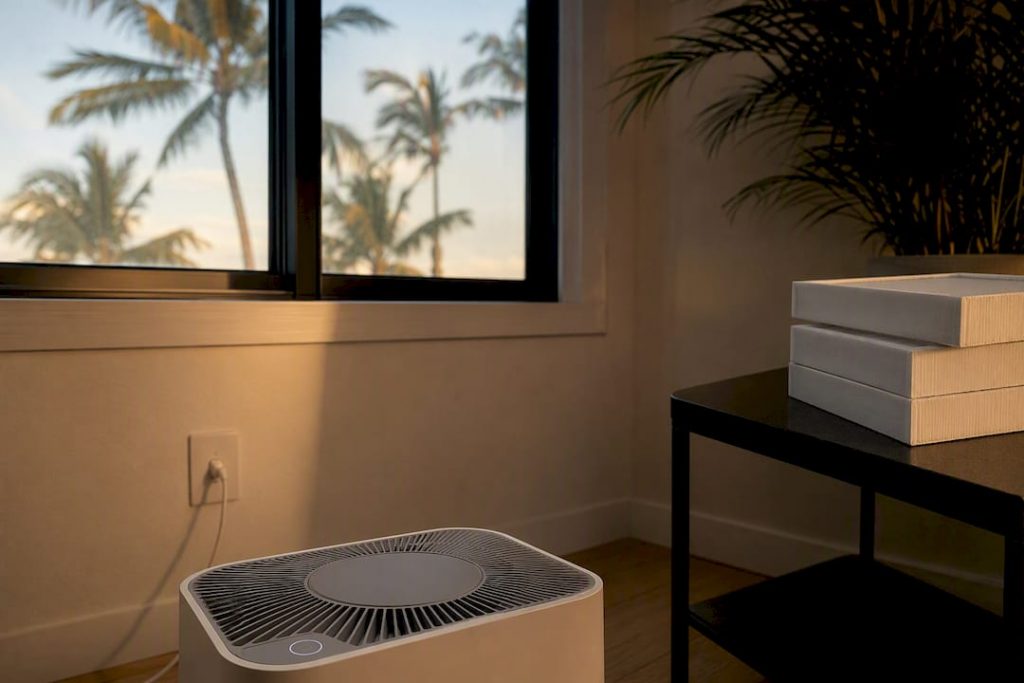
Running an air purifier typically adds only a small amount to your electricity bill. Most residential units draw between 5 and 50 watts on normal settings, which translates to a few dirhams a month in most homes. The larger recurring expense is almost always the replacement filter, not the power draw.
To put a number on it: a typical HEPA purifier running 12 hours a day at 30W and an example rate of AED 0.38 per kWh costs roughly a few dirhams a month in electricity. Filters on the same unit can cost two to four times that annually.
- Low estimate: small unit, 8 hours a day, low speed — a few dirhams monthly
- Typical estimate: medium unit, 12 hours a day, auto mode — around AED 4 to 8 monthly
- High estimate: large unit, 24 hours a day, high speed — AED 15 or more monthly
These figures use a sample rate for illustration only. Check your own utility bill for your exact tariff, then use the formula in the next section to get a precise number for your device.
Key Takeaways
Air purifier running cost is dominated by filter replacements rather than electricity, and the formula watts times hours divided by 1,000 times your kWh rate gives an accurate monthly figure for any device.
| Point | Details |
|---|---|
| Electricity is usually minor | Most units cost roughly AED 5 to AED 133 a year in electricity depending on wattage and hours of use. |
| Filters drive total cost | Filter replacements often cost two to four times more annually than electricity for the same unit. |
| Auto mode barely changes power draw | Measured studies show only about a 3% difference between auto and adjustable modes, so auto is rarely a compromise. |
| Sizing affects both costs | Matching CADR to room size cuts unnecessary run-time, lowering electricity use and filter wear together. |
| Climatepro stocks efficient, sized options | Climatepro’s Honeywell and Blueair range lets buyers match wattage and CADR to their room before committing to running costs. |
Table of Contents
- How to calculate your air purifier’s electricity cost
- What is a typical annual cost range once you add filters?
- What factors change how much your purifier costs to run?
- How much do replacement filters really add to the total?
- What are the best ways to cut running costs?
- Why trust this guide on air purifier running costs?
- Primary sources and references used in this guide
- What actually matters when you’re budgeting for a purifier
- Find an energy-efficient purifier that matches your room
- Sources
How to calculate your air purifier’s electricity cost
The calculation is straightforward once you have three numbers: the device’s wattage, your hours of daily use, and your local electricity rate. Energy is the standard approach, and it works the same way for an air purifier as it does for a fridge or a fan.
- Find the wattage on the unit’s label or spec sheet (often listed as a range for different fan speeds).
- Multiply watts by hours of daily use, then divide by 1,000 to convert to kilowatt hours (kWh).
- Multiply that daily kWh figure by your electricity rate per kWh to get daily cost.
- Multiply by 30 for a monthly figure, or 365 for annual cost.
The formula looks like this: (Watts × Hours per day ÷ 1,000) × kWh rate = daily cost.
Electricity prices vary considerably between markets, so plug in your own rate rather than relying on someone else’s example, as Statista’s cross-country price data makes clear. The table below uses an example rate of AED 0.38/kWh, a common approximate residential rate, but you should substitute your own from your latest bill.
Notice how much the hours-per-day variable moves the total. A unit left running around the clock at high speed costs roughly 20 times more than a small unit run only during waking hours on low. That gap matters more than the wattage rating printed on the box.
What is a typical annual cost range once you add filters?
Electricity alone rarely breaks the bank. Across the wattage bands you’ll find on the market, the yearly power cost sits in a fairly narrow window, and it’s the filter line item that swings the total.
- Low-power models (3–10W): roughly AED 5 to AED 17 a year in electricity at an example rate of AED 0.38/kWh, running 8 to 12 hours a day.
- Medium-power models (10–40W): roughly AED 17 to AED 66 a year under the same usage pattern.
- High-power models (40–80W): roughly AED 66 to AED 133 a year, more if run continuously at top speed.
Filter costs sit in a different bracket entirely. A budget replacement filter set might run AED 80 to AED 150 a year, a mid-range HEPA and carbon combo AED 150 to AED 350, and a premium multi-stage system AED 350 to AED 600 or more depending on replacement frequency.
Put the two together and the picture is clear: filters account for a large majority of the running cost over a year for a mid-range purifier. Independent cost-of-ownership analyses consistently find this same pattern across popular home purifiers, which is why filter price and lifespan deserve more attention than the wattage sticker when you’re comparing models.
What factors change how much your purifier costs to run?
Several variables explain why two seemingly similar purifiers can cost noticeably different amounts to operate. Wattage on the spec sheet is only the starting point.
- Fan speed and mode: high speed can draw two to four times the wattage of low speed, but a peer-reviewed measurement of real-world PAC operation found only about a 3% difference in energy use between auto and adjustable modes, because auto modes spend most of their time at lower speeds anyway.
- Filter condition: a clogged pre-filter or saturated HEPA filter forces the motor to work harder to pull the same volume of air through, which raises the wattage draw even on a fixed speed setting.
- Room size versus CADR: an oversized unit for a small room wastes energy running at a fan speed the space doesn’t need, while an undersized unit for a large room runs constantly just to keep up.
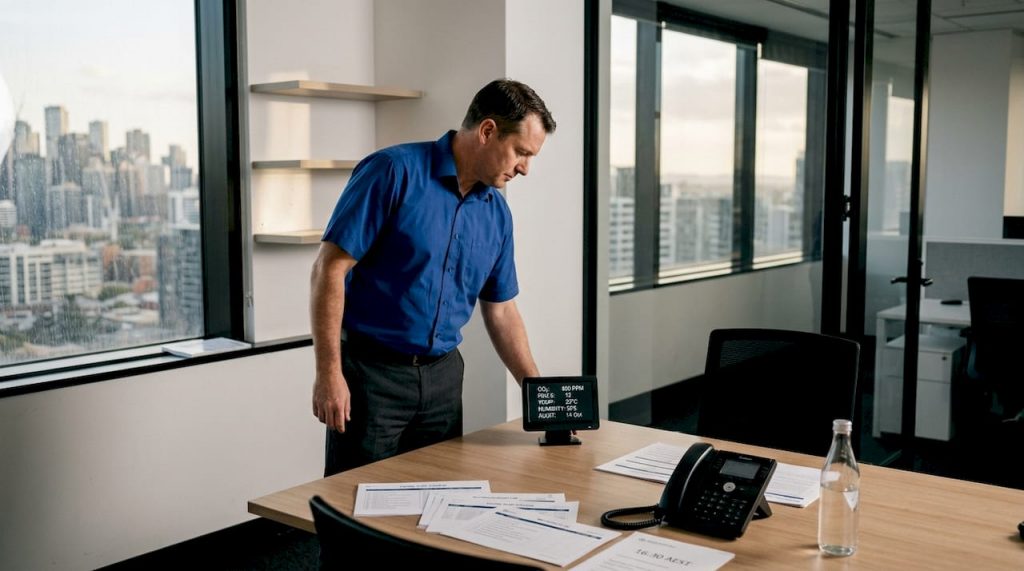
- Extra features: always-on displays, Wi-Fi connectivity, and air-quality sensors add a small continuous draw, usually under a few watts, but it adds up over a year of constant standby.
Pro Tip: Match the purifier’s rated CADR to your actual room size before you buy, not after. A correctly sized unit spends more time in low or auto mode instead of fighting to clean air in a space too large for it, which cuts both electricity use and filter wear.
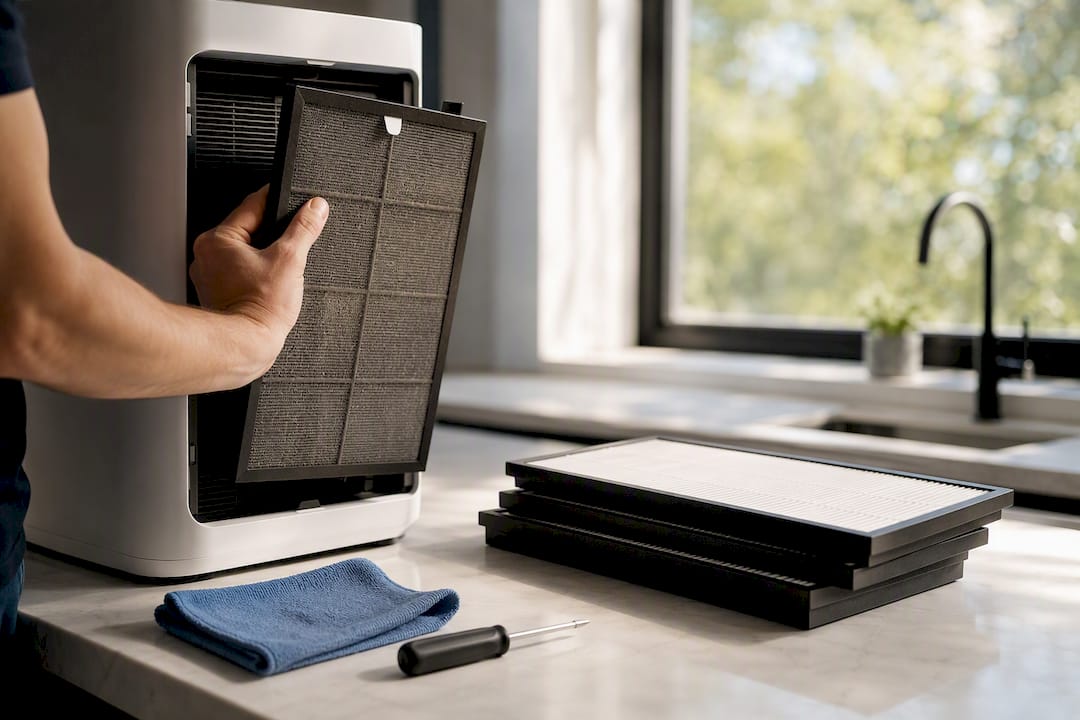
How much do replacement filters really add to the total?
Filters, not electricity, are the main recurring cost of owning an air purifier, and understanding their lifespan is more useful than obsessing over wattage.
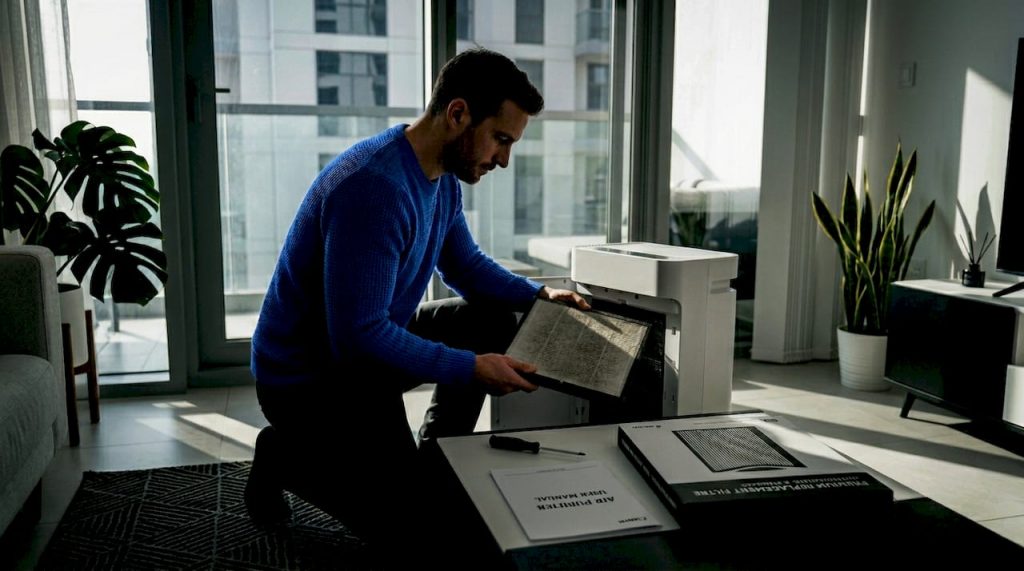
- HEPA filters: typically last 6 to 12 months depending on air quality and usage hours.
- Activated carbon filters: usually need replacing every 3 to 6 months since odour-absorbing capacity depletes faster than particle-trapping capacity.
- Washable pre-filters: can be rinsed and reused for the life of the unit, cutting filter spend if cleaned regularly.
Annual filter cost is simple to estimate: divide the filter’s price by how many months it lasts, then multiply by 12. A HEPA filter costing AED 225 with a 9 month lifespan works out to roughly AED 300 a year, a figure worth checking against the specific Blueair replacement filter listing for your model.
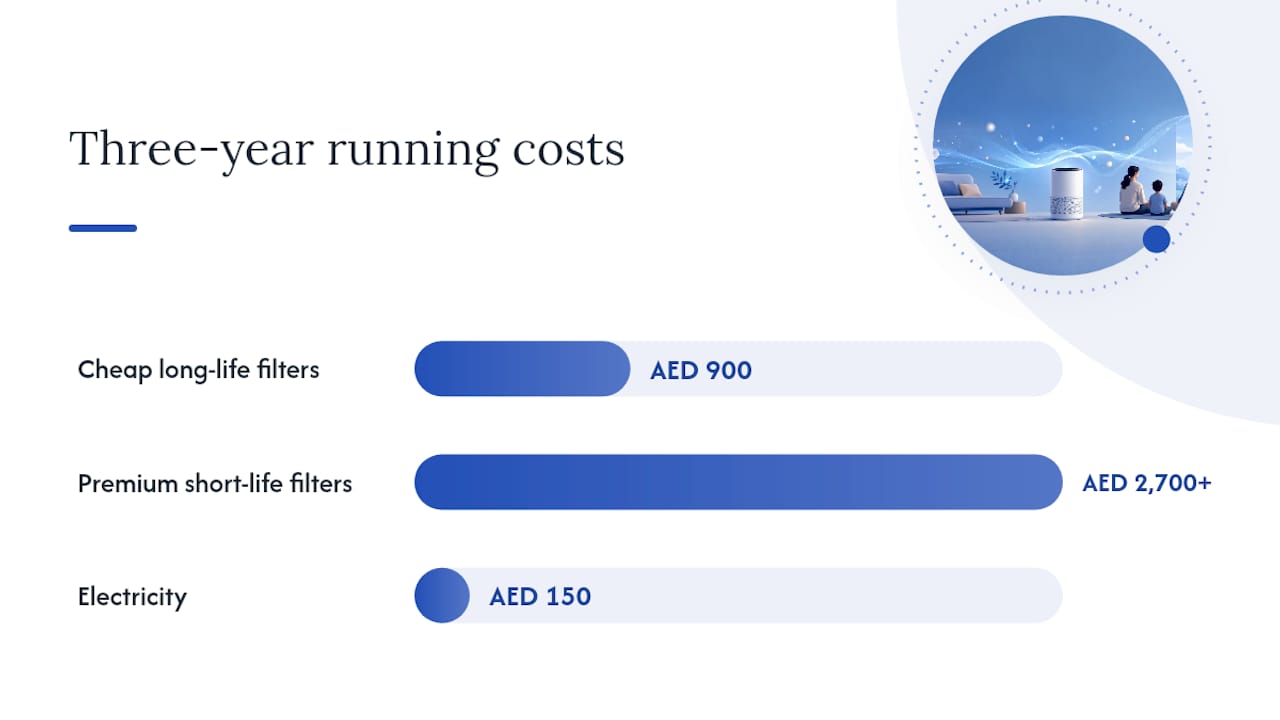
Over three years, a purifier with cheap, long-lasting filters might cost AED 900 total in filters against AED 150 in electricity. A model with premium filters replaced every three months could cost AED 2,700 or more in filters over the same period, dwarfing the electricity line entirely.
What are the best ways to cut running costs?
Small changes to how you operate a purifier reduce both power draw and filter wear at the same time.
- Run the unit on auto or eco mode rather than manual high speed for most of the day.
- Use a timer or occupancy-based scheduling so the unit isn’t running in empty rooms overnight.
- Match CADR rating to the specific room you’re using it in, rather than buying oversized “whole home” capacity for one bedroom.
- Clean pre-filters every two to four weeks and replace HEPA and carbon filters on schedule rather than waiting until airflow visibly weakens.
- Look for ENERGY STAR certified models and compare CADR-to-watt ratios between units before buying, since certified units use over 50% less energy than standard models on average.
Pro Tip: Buy genuine replacement filters rather than generic third-party alternatives. Off-brand filters often have lower media density, which means the motor works harder to pull air through them, quietly increasing your electricity draw even though the filter itself was cheaper.
If you want a broader look at running an efficient setup, Climatepro’s guide on energy efficient air cleaning workflows covers placement and scheduling in more depth, and a home energy audit approach like the one outlined in this Florida energy efficiency audit guide is a useful framework for checking where else in the house power is being wasted.
Why trust this guide on air purifier running costs?
Climatepro sells air purifiers, humidifiers, dehumidifiers, and genuine replacement filters across the UAE, with a focus on HEPA H13 filtration and room-specific sizing for homes, offices, clinics, and nurseries. That day-to-day work with filter lifespans and device specifications shapes the figures used throughout this guide.
- Genuine Blueair replacement filters are stocked to match specific unit models rather than generic fits.
- Product pages list wattage, CADR, and recommended room size so buyers can run their own cost calculations before purchasing.
Primary sources and references used in this guide
- ENERGY STAR air cleaner energy guidance on certified efficiency and CADR-to-watt performance.
- Peer-reviewed residential PAC energy-use study measuring real-world power draw.
- The Home Picker’s cost-of-ownership analysis comparing electricity against filter spend.
- The Independent’s running-cost testing on low-mode wattage and typical run-times.
What actually matters when you’re budgeting for a purifier
Most advice on this topic fixates on wattage, as though shaving 10W off a spec sheet meaningfully changes a household budget. It rarely does. The real lever is filter economics, and buyers who skip that comparison at purchase time end up locked into a model whose ongoing cost they never checked.
The conventional wisdom to “run it on auto to save power” is technically true but overstated. The measured difference between auto and manual modes is only about 3%, so the bigger saving comes from matching the unit’s CADR to the room rather than fiddling with settings on an oversized machine. Buy correctly sized in the first place, and the mode question mostly solves itself.
If you’re price-conscious, prioritise in this order: check the filter price and lifespan before you buy, confirm the CADR suits your room, then worry about wattage last. A cheap purifier with expensive, short-lived filters is a worse long-term buy than a pricier unit with filters that last twice as long. Run the numbers over three years, not three months, and the right choice usually becomes obvious.
— Nevel
Find an energy-efficient purifier that matches your room
Climatepro stocks purifiers with the wattage, CADR, and filter specifications listed upfront, so you can run the calculations in this guide before you buy rather than after. That’s the practical advantage over shopping by brand name alone: you know your likely electricity and filter cost in advance, instead of discovering it on your first replacement filter purchase.

For most apartments and bedrooms, the Honeywell Air Touch P1 offers a low entry price with modest running costs, while the Honeywell Air Touch P2 suits larger living areas needing higher CADR without a large jump in wattage. Genuine Blueair pre-filters and replacement cartridges are stocked to match specific models, so you’re not guessing at compatibility or paying for an oversized unit your room doesn’t need. Browse the full air purifier range and check the wattage and CADR listed on each product page before you decide.
Sources
- Measured residential PAC energy consumption study
- The True Yearly Cost to Run an Air Purifier (2026 Data) – The Home Picker
- How much does it cost to run an air purifier? | The Independent
Recommended
- Air purifier buying tips: how to choose the right one — Blog | ClimatePro UAE
- How to set up an air purifier: step-by-step guide — Blog | ClimatePro UAE
- Why choose energy-efficient purifiers for your home — Blog | ClimatePro UAE
- Best air purifiers for apartments: top picks and sizing guide — Blog | ClimatePro UAE