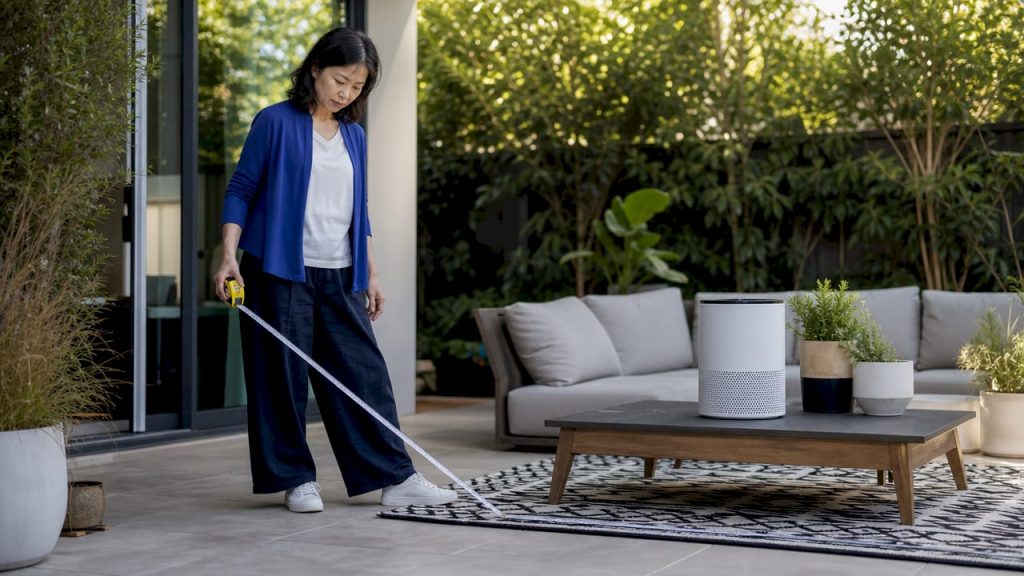
An air purifier’s effectiveness depends primarily on its ability to deliver sufficient clean air volume for your specific room size. True HEPA filters, the industry standard, capture 99.97% of particles at 0.3 microns, including dust, pollen, pet dander, and fine smoke particles. Two metrics endorsed by AHAM (Association of Home Appliance Manufacturers) and health authorities determine whether a unit actually cleans your air: CADR (Clean Air Delivery Rate) and ACH (Air Changes per Hour). These air purifier buying tips cut through marketing noise and focus on what genuinely matters for healthier indoor air.
1. How to calculate the right air purifier size
Sizing is the single most important step in choosing an air purifier. Industry experts recommend a smoke CADR of at least two-thirds of your room’s square footage for everyday use. For a 300 sq ft room, that means a minimum smoke CADR of 200.
For allergy sufferers, asthma patients, or anyone dealing with wildfire smoke, the recommendation increases to a full 1:1 ratio. That same 300 sq ft room would require a smoke CADR of 300. This higher threshold reflects the need to remove fine particles more aggressively and more frequently.
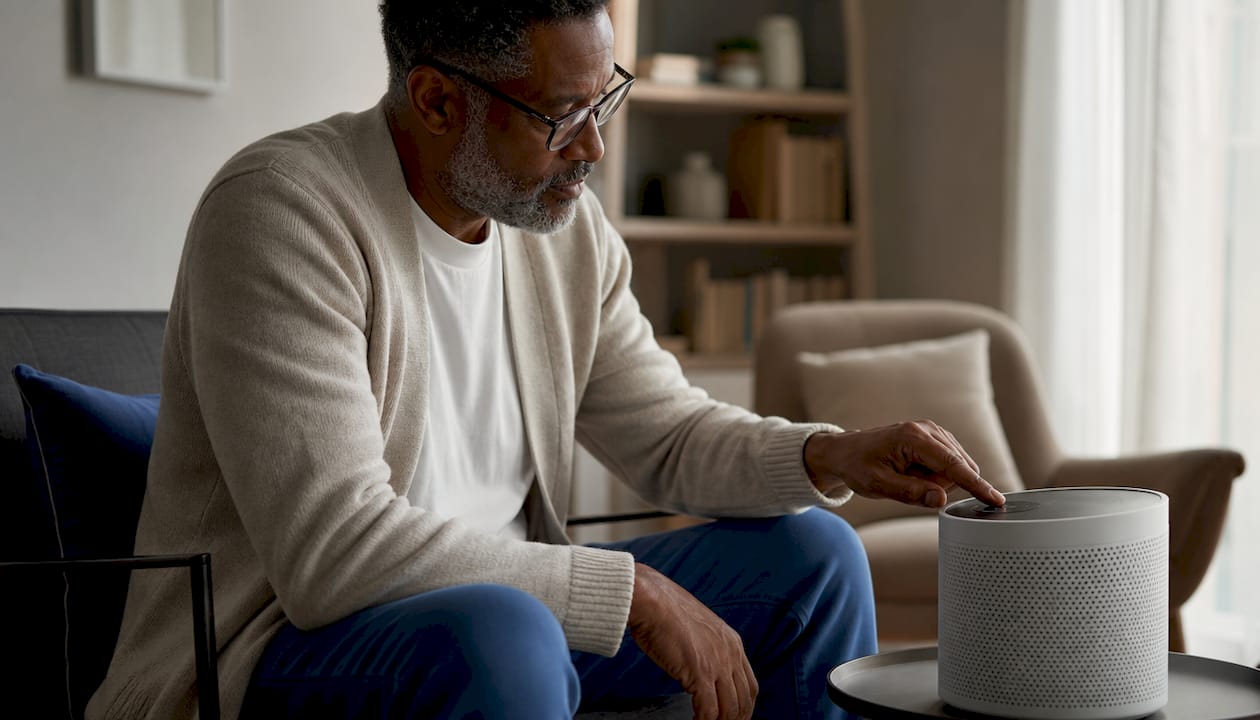
ACH measures how many times per hour the purifier cycles the entire room’s air volume through its filters. Air purifiers should deliver at least 4 ACH for general allergy relief, with 6–8 ACH preferred for sensitive individuals or bedroom use. These calculations assume a standard 2.4 metre ceiling. Higher ceilings increase the total air volume and require a unit with greater airflow capacity.
Pro Tip: Never rely on the coverage area printed on a box. Many brands exaggerate coverage ratings by 30–50%. Calculate your own requirements using smoke CADR and your room’s actual dimensions.
2. Understand filter types: True HEPA vs everything else
Filter labelling is where buyers most often get misled. True HEPA filters must capture 99.97% of particles at 0.3 microns and are rated MERV 17 or higher. That is a federal standard, not a marketing claim.
Filters labelled “HEPA-type,” “HEPA-like,” or “HEPA-style” do not meet this standard. They may capture larger particles but will miss the fine particulate matter most harmful to respiratory health. The difference matters most for allergy and asthma management, where fine particle capture is non-negotiable.
Key filter considerations for your buying checklist:
- True HEPA only. Confirm the product specifies “True HEPA” with 99.97% capture efficiency at 0.3 microns.
- Activated carbon for odours and gases. Activated carbon filters capture gases, odours, and VOCs that HEPA filters cannot. This layer is particularly useful in kitchens, homes with pets, or spaces near heavy traffic.
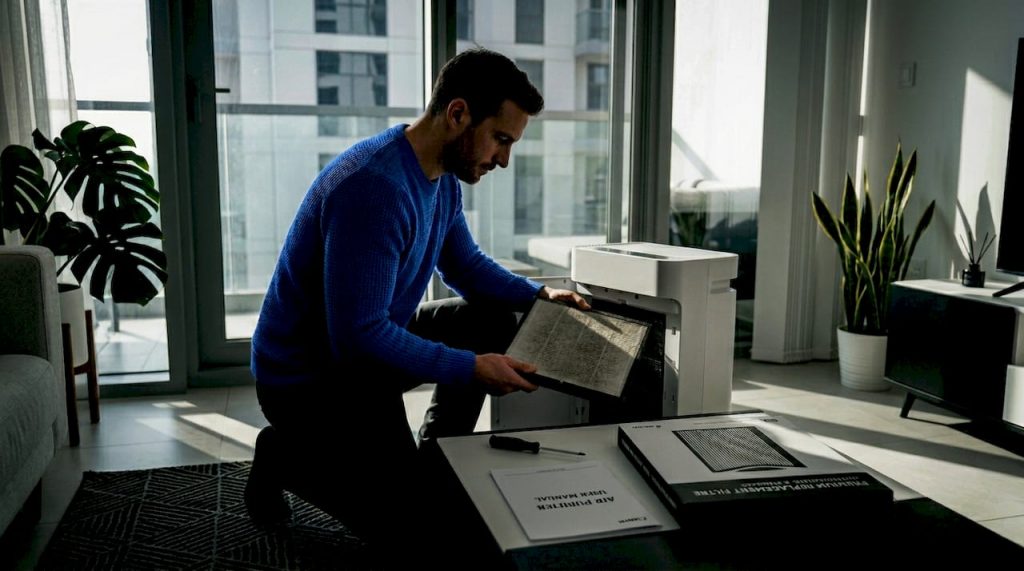
- Filter replacement cost. Filters typically require replacement every 6–12 months. Off-brand or non-certified filters can compromise effectiveness and cause leakage around the filter frame.
- Availability. Confirm replacement filters are stocked locally or through a reliable supplier before you buy the unit.
3. Key features that affect performance and daily use
Beyond size and filtration, several features influence how well a purifier performs in real conditions and how practical it is to live with.
- Fan speed and ACH. Running a purifier on low fan speed often fails to achieve the recommended ACH. Medium to high settings are necessary for genuine air cleaning. If the unit is too loud at those settings, the purifier is likely undersized for the space.
- Noise levels. Bedrooms require quieter operation. Check the decibel rating at medium speed, not just the minimum setting, which manufacturers often use to advertise low noise.
- Ozone emissions. Active purification technologies that emit ozone differ fundamentally from mechanical True HEPA filtration. Unless a unit is certified ozone-free, mechanical filtration is the safer choice for continuous indoor use.
- Smart sensors and auto mode. Air quality sensors that adjust fan speed automatically can be useful, but they do not replace the need for correct sizing. A sensor on an undersized unit will simply run at high speed constantly.
- Placement. Effective placement near pollution sources, with clearance for airflow on all sides, significantly improves performance. Placing a unit in a corner or behind furniture reduces its efficiency.
Pro Tip: Position your purifier near the primary source of pollution in the room, such as a window, doorway, or pet bed, rather than in the geometric centre. Clearance of at least 30 centimetres on all sides allows proper airflow.
Pairing your purifier with well-maintained ventilation also helps. Removing pollutants from HVAC systems reduces the particle load your purifier must handle, extending filter life and improving overall air quality.
4. Choosing the right purifier for each room
Different rooms present different air quality challenges. Matching the unit’s specifications to the specific environment produces better results than buying one unit for the whole home.
- Bedrooms. Prioritise quiet operation and higher ACH. For sensitive sleepers or allergy sufferers, 6 ACH or more is the recommended target. A unit that is too loud at effective speeds will be turned down or switched off, defeating its purpose.
- Living rooms and open-plan areas. Focus on higher CADR to handle the larger air volume. Open-plan spaces often require a unit rated for a larger area than the visible floor space suggests, particularly if the kitchen connects to the living area.
- Kitchens. An activated carbon filter layer is non-negotiable here. HEPA alone will not address cooking odours, gas fumes, or VOCs from cleaning products. A combined True HEPA and activated carbon unit handles both particles and gases.
- Allergy and asthma management. Size the unit for the full room area using the 1:1 CADR ratio. True HEPA filtration is mandatory. Run the unit continuously, not just when symptoms appear.
- Wildfire smoke events. Run the purifier on high with windows and doors closed. The smoke CADR rating is the most important metric for fine particle removal during smoke events, outperforming dust or pollen CADR ratings for this specific purpose.
For home offices, the same principles that apply to office air quality improvement translate directly: size for the room, run continuously, and prioritise True HEPA with activated carbon.
Key takeaways
The most effective air purifier is one correctly sized to your room using smoke CADR and ACH metrics, fitted with a certified True HEPA filter, and run continuously at medium to high speed.
| Point | Details |
|---|---|
| Size by smoke CADR | Match smoke CADR to at least two-thirds of room square footage for standard use, or 1:1 for allergy and asthma needs. |
| True HEPA is non-negotiable | Only filters rated True HEPA capture 99.97% of 0.3-micron particles; HEPA-type labels do not meet this standard. |
| ACH determines real performance | Target at least 4 ACH for general use and 6–8 ACH for bedrooms or sensitive individuals. |
| Factor in filter running costs | Replacement filters cost money every 6–12 months; confirm availability before purchasing the unit. |
| Placement and fan speed matter | Run at medium to high speed and position near the pollution source with clear airflow on all sides. |
What I’ve learned from watching buyers get this wrong
The most common and costly error buyers make is choosing a unit that is too small for the room. Undersizing results in ineffective air cleaning and wasted energy, regardless of how many features the unit has. A purifier running at full speed in a room twice its rated capacity will never achieve the ACH needed to make a meaningful difference.
The second mistake is equating price with performance. The highest-priced, most feature-rich purifiers are not always the most effective. A correctly sized unit with a genuine True HEPA filter and an activated carbon layer will outperform an expensive, feature-heavy model that is undersized for the space.
Recurring costs are also underestimated. Buyers focus on the purchase price and overlook the 6–12 month filter replacement cycle. Over three years, filter costs can exceed the original unit price. Check the replacement filter price and stock availability before committing to any model.
Continuous operation is the final piece. An air purifier switched on only when air quality is visibly poor cannot maintain the ACH needed for genuine health benefits. Run it continuously at the correct fan speed, and the air quality difference becomes measurable.
— Nevel
Climatepro’s range for every room and need
Climatepro stocks a broad selection of True HEPA air purifiers suited to different room sizes and air quality requirements across the UAE.

Whether you need a compact unit for a bedroom or a higher-capacity model for a large living area, Climatepro carries options with genuine True HEPA filtration and activated carbon layers. The Honeywell Air Touch P2 suits medium-sized rooms and delivers reliable particle capture at an accessible price point. For a broader selection across capacities and budgets, the full air purifier catalogue includes detailed specifications, CADR ratings, and genuine replacement filters. Climatepro also provides guidance on sizing and selection to help you match the right unit to your specific room and air quality concern.
FAQ
What does CADR mean on an air purifier?
CADR stands for Clean Air Delivery Rate. It measures the volume of filtered air a purifier delivers per minute, with separate ratings for smoke, dust, and pollen.
What is the difference between True HEPA and HEPA-type filters?
True HEPA filters capture 99.97% of particles at 0.3 microns and meet a recognised filtration standard. HEPA-type or HEPA-like filters do not meet this standard and offer lower capture efficiency.
How often do air purifier filters need replacing?
Most filters require replacement every 6–12 months, depending on usage and air quality conditions. Using non-certified replacement filters can reduce effectiveness and cause air to bypass the filter.
What ACH rating do I need for a bedroom?
Bedrooms benefit from at least 4 ACH for general use, with 6–8 ACH recommended for allergy sufferers or sensitive individuals to maintain clean air during sleep.
Does running an air purifier on low speed work?
Running a purifier on low speed typically fails to achieve the recommended ACH for the room. Medium to high fan speeds are necessary for genuine air cleaning performance.
Recommended
- Dyson Air Purifier Buying Guide: Which Model Is Right for You? — Blog | ClimatePro UAE
- Levoit air purifier 300S: is it right for you? — Blog | ClimatePro UAE
- Why choose energy-efficient purifiers for your home — Blog | ClimatePro UAE
- Levoit Core 300S air purifier: Guide to cleaner indoor air — Blog | ClimatePro UAE