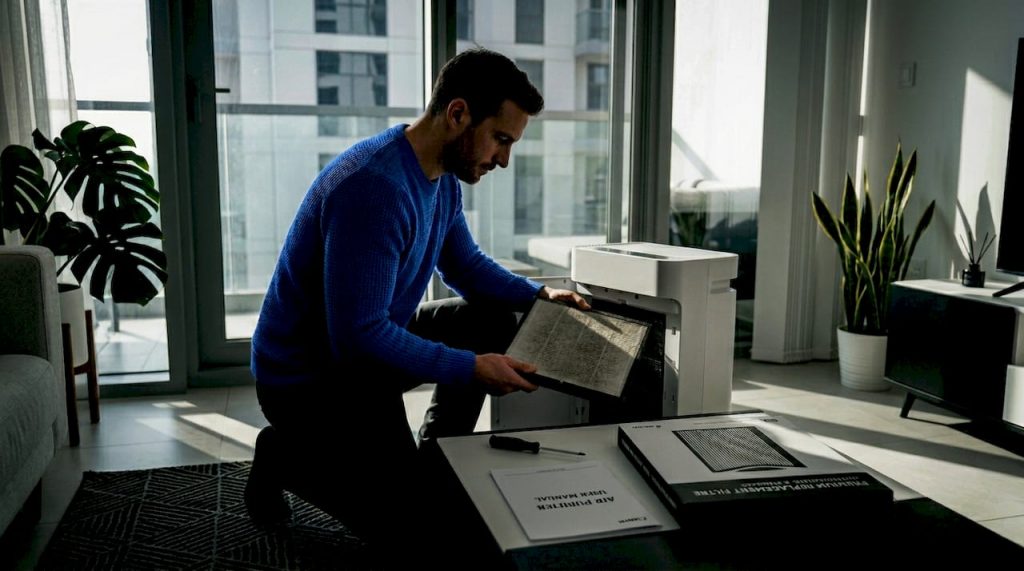
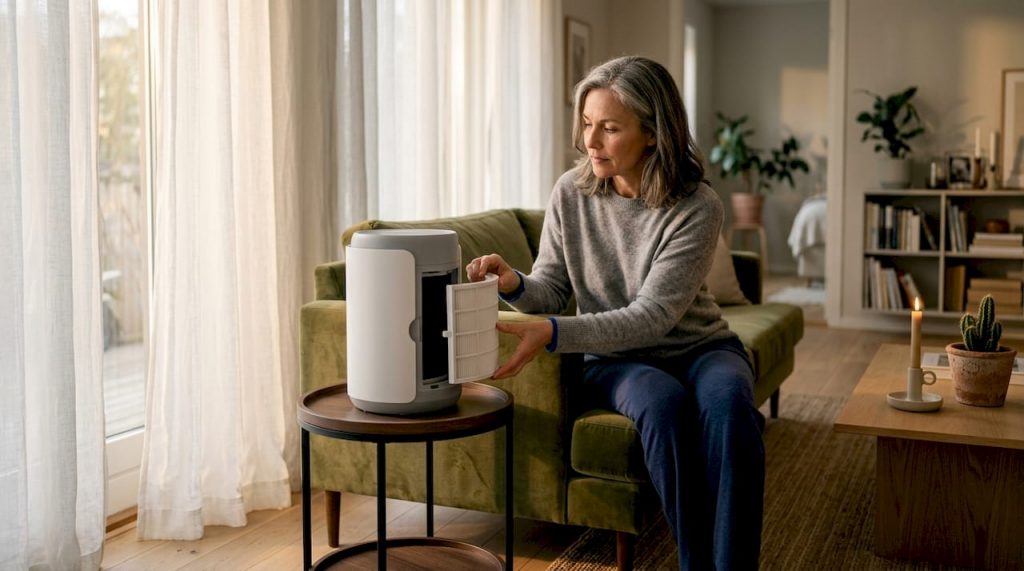
Air cleaner maintenance is the set of care routines that keep your air purifier working efficiently and extend its lifespan. The industry term for this practice is air purifier upkeep, which covers filter cleaning, filter replacement, exterior care, and correct device placement. Consistent maintenance protects the filters that trap dust, allergens, and pollutants before they circulate through your home. True HEPA filters need replacement every 6–12 months, while activated carbon filters require attention every 3–6 months. Skipping these routines does not just reduce air quality. It shortens the life of a device you have invested in.
1. How often should you clean and replace air cleaner filters?
Filter replacement frequency depends on filter type and household conditions. Each filter in your air purifier has a different job and a different lifespan.
Washable pre-filters
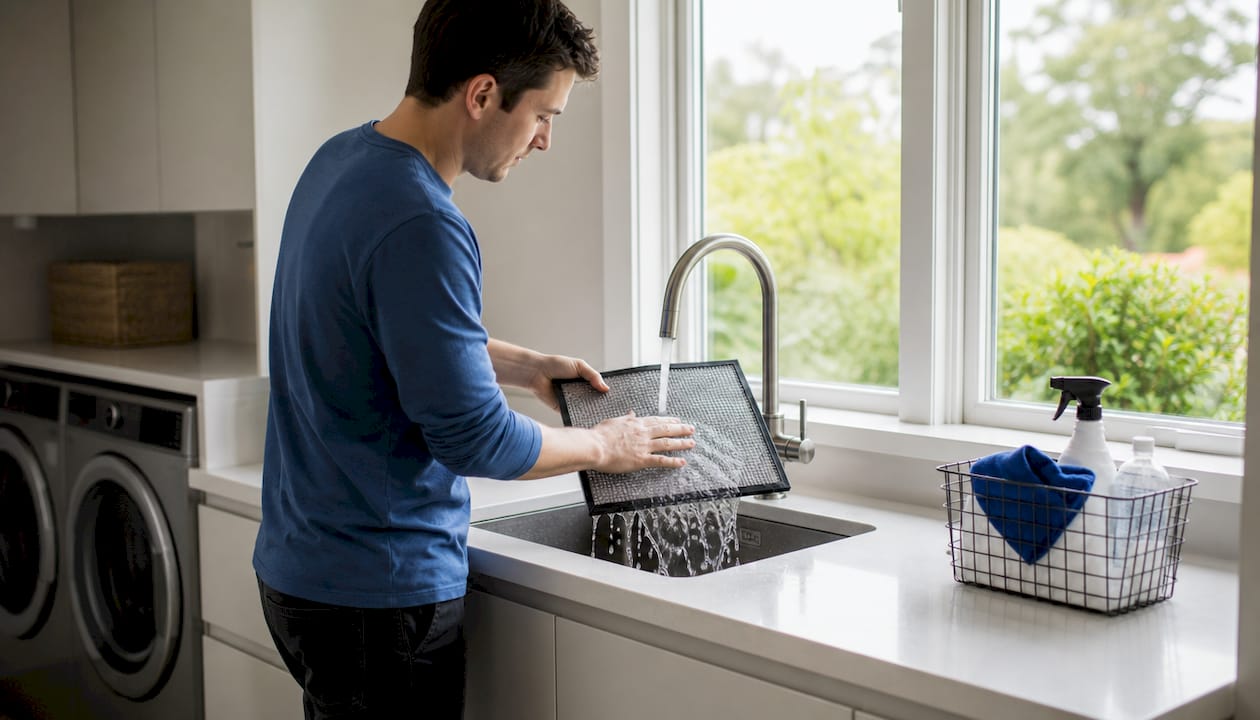
Washable pre-filters need cleaning every 2–4 weeks. In homes with shedding pets, clean them every two weeks. Pre-filters catch large particles like hair, dust, and lint before they reach the HEPA layer. Keeping them clean is the single most effective way to protect your more expensive filters downstream.
True HEPA filters
True HEPA filters last 6–12 months under normal residential use. In high-particulate environments, such as pet or smoker households, that window shortens to 6–8 months. A HEPA filter that is overloaded cannot trap fine particles effectively, which means pollutants pass back into your indoor air.
Activated carbon filters
Activated carbon filters need replacement every 3–6 months. In pet or smoker homes, expect to replace them every 2–3 months. The clearest sign that a carbon filter is spent is the return of odours the purifier previously controlled. Do not wait for the indicator light to confirm what your nose already knows.
Environment matters
A household with two dogs in a small apartment will exhaust filters faster than a single-occupant home with no pets. Cooking frequently with strong spices, living near a construction site, or running the purifier 24 hours a day all accelerate filter loading. Adjust your replacement schedule to match your actual conditions, not just the manufacturer’s default.
2. Best practices for cleaning your air cleaner’s components
Safe cleaning methods protect your device and prevent accidental damage. The wrong technique on the wrong component can render a filter useless.
- Exterior casing and vents: Wipe the outside of the unit weekly with a dry or lightly damp microfiber cloth. This removes surface dust before it migrates into the intake.
- Washable pre-filters: Rinse gently under lukewarm water. Do not scrub or use detergent. Shake off excess water and leave the filter to air dry completely before reinstalling.
- HEPA filters: Never wash HEPA filters. Water damages the fine fibres that trap particles, and the filter loses its effectiveness permanently. Do not vacuum them either, as this can tear the media.
- Activated carbon filters: Do not wash or vacuum carbon filters. Water neutralises the activated carbon, destroying its ability to absorb gases and odours.
- Internal components: Always unplug the device before opening it. Use a dry microfiber cloth or a soft brush to remove loose dust from internal surfaces. Never spray liquid inside the unit.
Pro Tip: Wipe the intake vents with a dry microfiber cloth every week. This 60-second habit slows pre-filter saturation and delays the point at which you need to wash or replace filters.
Reinstalling a wet pre-filter is one of the most common and damaging mistakes homeowners make. A damp filter inside a running purifier creates the conditions for mould growth, and the unit then blows mould spores directly into your indoor air.
3. Where to place your air cleaner for optimal airflow and longevity
Placement affects how hard your purifier works and how long it lasts. A poorly positioned unit strains its motor and clogs its filters faster.
- Keep the unit at least 15–30 cm away from walls, curtains, and furniture on all sides.
- Never block the intake or output vents with objects, fabric, or furniture.
- Place the purifier in the room where you spend the most time, typically the bedroom or living area.
- Avoid placing the unit in corners, as airflow is restricted from multiple directions simultaneously.
- Keep it away from direct sunlight and heat sources, which can degrade plastic components and filter materials over time.
Blocked vents force the motor to work harder to pull air through the unit. This increases energy use and raises the risk of motor failure over time. A simple tissue test confirms whether airflow is adequate: hold a tissue near the output vent and check that it moves steadily when the unit is running.
Pro Tip: Set a weekly reminder to wipe the intake vents with a dry cloth. Dust accumulation on vents indirectly accelerates filter clogging, and this one habit adds weeks to your filter’s effective life.
4. How to interpret filter indicator lights and maintenance signs
Filter indicator lights are runtime-based timers, not sensors that measure actual filter condition. This distinction matters more than most homeowners realise.
“Most filter indicators track runtime, not actual filter cleanliness. This makes a visual or olfactory check essential to determine true filter condition. Relying solely on the indicator light leads to either premature replacement or delayed maintenance, both of which cost you money or air quality.”
The indicator light resets when you press a button, regardless of whether you replaced the filter. That means a light can show “clean” on a filter that is heavily loaded, or trigger a replacement alert on a filter that still has weeks of life left.
Use these checks instead:
- Visual inspection for HEPA: A new HEPA filter is white or light grey. A filter ready for replacement is visibly dark, grey, or brown from trapped particulates.
- Smell test for carbon filters: If odours that the purifier previously controlled have returned, the carbon filter is spent. Replace it promptly.
- Airflow check: Reduced airflow from the output vent, even on a high fan setting, indicates a clogged filter.
- Increased noise: A motor working harder than usual to pull air through a blocked filter often produces a louder or strained sound.
Hands-on inspection is more reliable than indicator lights alone. Use the light as a prompt to inspect, not as a definitive instruction to replace.
5. Common mistakes to avoid and tips to extend your air cleaner’s lifespan
The most preventable cause of premature air purifier failure is neglecting the washable pre-filter. When the pre-filter is clogged, the HEPA layer absorbs the full load of incoming particulates and degrades far faster than it should.
Neglecting washable pre-filters is the primary driver of early HEPA filter failure. Pre-filter cleaning every two weeks in a pet-heavy home can extend HEPA filter lifespan by up to 50%. That translates directly into fewer replacement purchases and a lower cost of ownership over the device’s life.
Common mistakes to avoid:
- Reinstalling damp filters: Damp pre-filters create mould risk inside the unit. Always allow at least 24 hours of air drying before reinstalling.
- Washing HEPA or carbon filters: Both filter types are destroyed by water. Replace them; do not attempt to clean them.
- Using harsh chemicals: Cleaning sprays, bleach, and strong detergents damage plastic housings and filter materials. Use only water for pre-filters and dry cloths for everything else.
- Running the unit with a missing filter: Some homeowners remove a dirty filter and run the unit while waiting for a replacement. This pulls unfiltered air through the device and deposits particulates on internal components.
- Ignoring the pre-filter entirely: Skipping pre-filter care because it seems minor is the fastest route to an expensive HEPA replacement.
Pro Tip: Align your maintenance schedule with your household’s pollution level. A home with pets, smokers, or frequent cooking needs a two-week pre-filter cycle. A low-traffic apartment with no pets can extend that to four weeks. Matching the schedule to your actual conditions saves money without compromising air quality.
For a detailed walkthrough of the replacement process, the filter replacement workflow on the Climatepro blog covers each step clearly.
Key takeaways
Consistent pre-filter care is the single most effective air cleaner maintenance habit, protecting HEPA and carbon filters and reducing the total cost of ownership.
| Point | Details |
|---|---|
| Pre-filter cleaning frequency | Clean washable pre-filters every 2–4 weeks, or every two weeks in pet households. |
| HEPA and carbon replacement | Replace HEPA filters every 6–12 months and carbon filters every 3–6 months. |
| Never wash HEPA or carbon filters | Water permanently damages both filter types; replace them instead of cleaning them. |
| Placement affects performance | Keep the unit 15–30 cm from walls and obstructions to maintain airflow and reduce motor strain. |
| Indicator lights are timers | Use visual and smell checks to assess true filter condition, not indicator lights alone. |
What I have learned from years of watching homeowners maintain air purifiers
Most homeowners treat their air purifier like a smoke alarm: they install it, forget it, and only notice it when something goes wrong. The filter indicator light reinforces this habit because it feels like a reliable signal. The reality is that the light is a countdown timer, and it has no idea what is actually inside your unit.
The pattern I see most often is this: the pre-filter gets ignored for months, the HEPA filter loads up in half the expected time, and the homeowner concludes the device is poor quality. The device is fine. The maintenance routine is not.
In pet-heavy homes, the difference between a two-week and a four-week pre-filter cycle is significant. I have seen HEPA filters in pet households last well beyond the standard replacement window simply because the pre-filter was cleaned consistently. That one habit, taking less than five minutes, protects the most expensive component in the unit.
The drying step is the one most people skip when they are in a hurry. A filter that feels dry to the touch may still hold moisture inside. Give it the full 24 hours. The risk of mould inside a running purifier is not worth the convenience of reinstalling it early.
My practical advice: set a recurring phone reminder every two weeks to check the pre-filter. Combine it with a quick wipe of the intake vents. That four-minute routine, done consistently, will extend your device’s life and keep your indoor air genuinely clean.
— Nevel
Climatepro’s range of air purifiers and replacement filters
Maintaining your air purifier is straightforward when you have the right replacement filters on hand. Climatepro stocks a full range of air purifiers and genuine replacement filters for residential use across the UAE, with delivery to Dubai, Abu Dhabi, Sharjah, and all seven emirates.

The Climatepro catalogue includes the Honeywell Air Touch P2, a reliable residential purifier with genuine pre-filter, HEPA, and carbon filter replacements available separately. For homeowners who need a pre-filter replacement specifically, the Honeywell Air Touch U2 pre-filter is stocked and ready to ship. Keeping a spare filter on hand means you never have to run your purifier unprotected while waiting for a delivery. Browse the full air purifiers range to find the right model and matching filters for your home.
FAQ
How often should I clean my air purifier’s pre-filter?
Clean washable pre-filters every 2–4 weeks under normal conditions. In homes with shedding pets, clean them every two weeks to protect the HEPA filter and maintain airflow.
Can I wash a HEPA filter to extend its life?
No. Water permanently damages HEPA filter fibres and destroys their particle-trapping ability. HEPA filters must be replaced, not washed, when they reach the end of their service life.
Why does my air purifier smell even though the indicator light is green?
Filter indicator lights are runtime timers, not condition sensors. If odours have returned, the activated carbon filter is spent and needs replacement regardless of what the indicator shows.
How do I know if my air purifier is placed correctly?
Position the unit at least 15–30 cm from walls, curtains, and furniture on all sides. Hold a tissue near the output vent on a high fan setting. Steady movement confirms unobstructed airflow.
How long will a HEPA filter last if I clean the pre-filter regularly?
Regular pre-filter cleaning every two weeks in a pet-heavy home can extend HEPA filter lifespan by up to 50%, pushing replacement intervals toward the longer end of the 6–12 month range.