
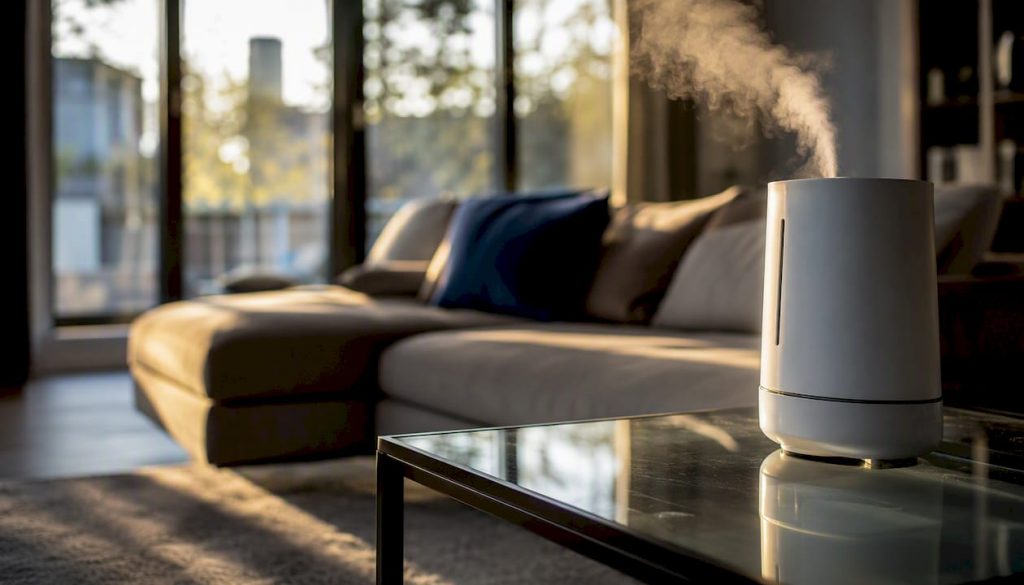
Humidifiers can relieve dry-air symptoms, support skin hydration, ease breathing discomfort, and improve sleep quality when indoor humidity is kept within the recommended range and the device is cleaned regularly. The main advantages cover four areas: respiratory comfort, sleep quality, skin and hair health, and protection of wooden furniture and plants. The chief caveat is straightforward: overuse or poor maintenance can encourage mould and bacteria growth, turning a helpful device into a health risk.
Key advantages at a glance:
- Breathing: relieves nasal congestion, soothes dry throats, and makes coughs more productive
- Sleep: reduces airway irritation that contributes to snoring and disrupted rest
- Skin and hair: supports the skin barrier, reduces flaking, and may ease eczema discomfort
- Home: protects wooden floors, furniture, and household plants from dry-air damage
Pro Tip: Buy or pair your humidifier with a hygrometer (a humidity monitor). Aim for 40–50% relative humidity indoors. That single habit prevents both under- and over-humidification.
Key takeaways
Humidifiers deliver consistent benefits for nasal comfort, skin hydration, and sleep quality when indoor humidity is kept at 40–50% and the device is cleaned on a regular schedule.
| Point | Details |
|---|---|
| Target humidity range | Keep indoor humidity at 40–50% to support comfort and limit mould and dust-mite growth. |
| Top health benefits | Nasal congestion relief, dry throat comfort, more productive coughs, and reduced skin dryness are the most consistently supported outcomes. |
| Maintenance is non-negotiable | Empty and rinse the tank daily; disinfect weekly; replace filters monthly to prevent mould and bacteria build-up. |
| Water type matters | Use distilled or demineralised water in ultrasonic and evaporative units to avoid white dust and mineral scale. |
| Climatepro | Browse the Climatepro humidifier range for curated options with built-in humidistats suited to Australian home and office use. |
Table of Contents
- What are the main advantages of humidifiers for health?
- How does a humidifier actually work?
- Which humidifier type suits your needs?
- What are the risks, and how do you avoid them?
- Practical tips for using a humidifier in Australian homes
- What does the research say about humidifier benefits?
- How to choose the right humidifier: a quick checklist
- A practical note on getting this right
- Climatepro humidifiers: a practical starting point
- Sources
What are the main advantages of humidifiers for health?
Added moisture in indoor air has a direct effect on the mucous membranes lining the nose, throat, and airways. When those membranes stay hydrated, they function better as a first line of defence against airborne irritants.
Respiratory comfort
Humidifiers add moisture to dry indoor air and can relieve nasal congestion, ease dry or sore throats, and help thin mucus so it can be expelled more easily. Moist air also reduces the friction and irritation that makes a dry cough worse. For people dealing with a cold or flu, humidified air can ease the discomfort by keeping airways moist throughout the night.
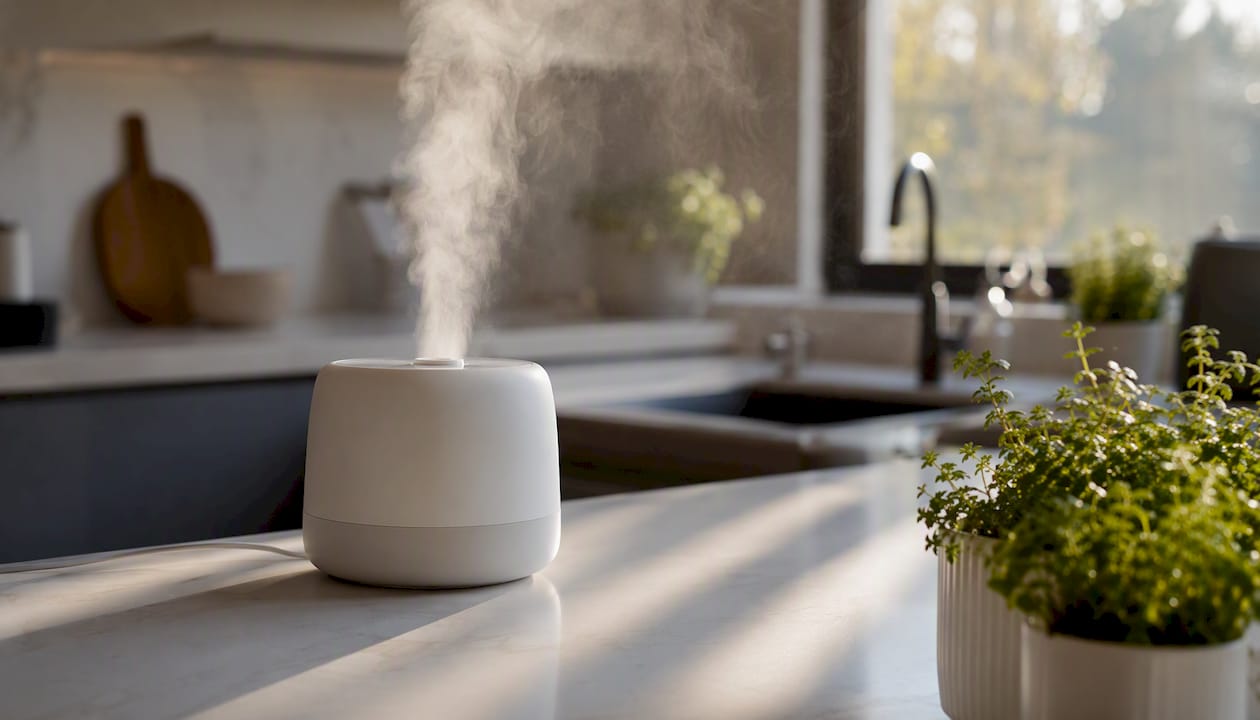
Snoring often worsens in dry conditions because the throat and nasal passages become irritated. Raising indoor humidity can reduce that irritation and, for some people, help reduce snoring.
For chronic respiratory conditions like asthma, the picture is more nuanced. Humid air may soothe airways in the short term, but humidity set too high encourages dust mites and mould, both of which are common asthma triggers. The National Asthma Council Australia advises people with asthma to consult their clinician before making humidification a regular part of their routine.
Sleep quality
Dry indoor air, particularly in heated or heavily air-conditioned rooms, irritates the throat and nasal passages during sleep. A humidifier running at the right level reduces that irritation, which can mean fewer overnight wake-ups and less morning throat soreness. The connection to snoring reduction also applies here: less airway dryness often means quieter, more settled sleep.
Skin and hair
Controlled indoor humidity supports skin barrier integrity. Low humidity draws moisture out of the skin, leading to dryness, itching, and flakiness, symptoms that worsen with indoor heating or dry climates. Maintaining humidity helps skin and can also protect wooden floors and furniture, reducing static electricity in the process. For people with atopic dermatitis or eczema-prone skin, a humidifier can improve comfort, though it is not a substitute for prescribed treatment.

Humidifiers can also help with irritated eyes and may reduce snoring, alongside the skin and home benefits noted above.
Clinical note: Humidifiers are environmental management tools, not medical treatments. If respiratory or skin symptoms persist or worsen, consult a health professional rather than increasing humidifier output.
How does a humidifier actually work?
A humidifier releases water vapour or fine water droplets into the air, raising the relative humidity of the room. That added moisture keeps mucous membranes hydrated, thins mucus so it moves more freely, and reduces the skin moisture loss that dry air accelerates.
The output method varies by type, which affects safety, running cost, and maintenance needs. At a high level, units either heat water to produce steam, use ultrasonic vibrations to create a cool mist, or draw air through a wet wick to release evaporated moisture. Each approach delivers the same core outcome: more moisture in the air.
Pro Tip: For a detailed breakdown of ultrasonic technology specifically, the ultrasonic humidification guide covers how these units work and what to watch for during maintenance.
Which humidifier type suits your needs?
Choosing the right category comes down to room size, who lives in the home, and how much maintenance you are willing to do.
| Type | How it works | Burn risk | Best use case |
|---|---|---|---|
| Cool-mist ultrasonic | Ultrasonic vibrations create fine mist | None | Bedrooms, nurseries, households with children or pets |
| Evaporative | Fan draws air through a wet wick | None | Single rooms, low-maintenance preference |
| Warm-mist / steam | Boils water to produce steam | Yes (hot surfaces) | Adults-only rooms, cold climates |
| Central / whole-house | Integrated with HVAC system | Varies by model | Whole-house humidity control |
Cool-mist ultrasonic units are the most widely sold option for good reason. They run quietly, carry no burn risk, and suit bedrooms and nurseries. The trade-off is that they are more sensitive to water quality: tap water minerals become airborne as fine white dust, which settles on surfaces and can be inhaled. Using distilled or demineralised water solves this.
Evaporative units use a fan and a wet wick filter, which naturally limits over-humidification because the evaporation rate slows as humidity rises. They are self-regulating to a degree, but the wick filter needs regular replacement.
Warm-mist models boil water before releasing steam, which kills most waterborne microbes in the process. The hot water and steam surfaces are a burn hazard, making these unsuitable for households with young children or pets. Experts recommend cool-mist units in households with children or pets specifically to remove this risk.
Central systems connect to a home’s existing HVAC and humidify the whole house simultaneously. They require professional installation but eliminate the need to manage multiple portable units.
Pro Tip: Always use distilled or demineralised water in ultrasonic and evaporative units. It reduces white dust, lowers mineral build-up inside the tank, and extends the time between deep cleans. For nurseries, see the nursery humidifier guide for model-specific advice.
What are the risks, and how do you avoid them?
If misused, humidifiers can worsen respiratory problems by spreading microbes or encouraging mould growth. The risks are real but entirely preventable with consistent maintenance and correct humidity settings.
Cleaning checklist
- Daily: Empty the tank, rinse it with clean water, and refill with fresh water before each use. Never leave stagnant water sitting in the tank.
- Weekly: Disinfect the tank and base with a diluted white vinegar solution or a manufacturer-approved disinfectant. Rinse thoroughly before reassembling.
- Monthly: Inspect and replace filters or wicks as recommended by the manufacturer. Check for mineral scale build-up and descale if needed.
If humidifiers are not cleaned regularly, stagnant water and dirty filters can become breeding grounds for mould and bacteria that may worsen respiratory symptoms. Improper maintenance is the primary cause of humidifier-associated health problems.
Humidity targets
Target range: 40–50% relative humidity indoors. The broader acceptable band is 30–50%. Maintaining indoor humidity between about 30% and 50% helps limit mould and dust-mite growth while supporting skin and hair hydration.
Signs humidity is too high: condensation on windows, damp patches on walls or ceilings, or a musty smell. If you notice any of these, reduce the humidifier output or run it for shorter periods.
Water type and white dust
Tap water may contain minerals that become airborne as white dust with ultrasonic and evaporative units. This dust settles on surfaces and can be inhaled. Using distilled or demineralised water, or a manufacturer-supplied demineralisation cartridge, reduces this significantly.
Warning for asthma and allergy sufferers: Consult a healthcare professional before using a humidifier routinely. Humidity above 50% can increase dust mite and mould populations, which are common triggers. The healthy home environment checklist covers broader ventilation and humidity monitoring steps worth reviewing alongside this guide.
Practical tips for using a humidifier in Australian homes
Air conditioning and heating both reduce indoor humidity. In strongly air-conditioned Australian homes, humidification may be beneficial year-round rather than only in winter. During winter heating periods, indoor humidity can drop sharply, making a humidifier particularly useful. In dry inland regions, low humidity is a near-constant condition regardless of season.
Placement and run time
- Place the unit on a flat, stable surface at least 30 cm from walls and furniture to allow even moisture distribution.
- Keep warm-mist units out of reach of children and pets at all times.
- Position the humidifier near the person or in the room that needs it most, rather than running multiple units throughout the house.
- Run the unit for several hours per day as a general guide, adjusting based on your hygrometer reading. Avoid continuous 24/7 operation unless the unit has a built-in humidistat that switches it off automatically when the target level is reached.
- Monitor with a standalone hygrometer if the unit does not have one built in. Readings above 55% are a signal to reduce output.
For room-specific placement advice, including bedrooms, living areas, and home offices, a room-by-room approach helps match output to actual need.
Pro Tip: Use distilled or demineralised water in portable units. Beyond reducing white dust, it also means less mineral scale inside the tank, which translates to fewer deep cleans and longer filter life.
What does the research say about humidifier benefits?
The evidence base for humidifiers is consistent on some points and mixed on others.
Well-supported benefits: nasal comfort, relief from dry throat and sore airways, more productive coughs, and reduced skin dryness. These outcomes have consistent support across clinical guidance from sources including Mayo Clinic and MedlinePlus.
Mixed evidence: long-term effects on chronic respiratory conditions and infection control. Some studies report lower influenza presence at around 42% relative humidity, and humidification may reduce virus survival in certain settings. However, results are context-dependent and not definitive. The classroom studies showing fewer flu-like cases in humidified rooms are a coherent signal, but the evidence is not strong enough to position a humidifier as an infection-control device.
| Outcome | Evidence strength | Recommended humidity |
|---|---|---|
| Nasal congestion relief | Consistent | 40–50% |
| Dry throat / cough relief | Consistent | 40–50% |
| Skin dryness reduction | Consistent | 40–50% |
| Snoring reduction | Moderate | 40–50% |
| Influenza presence reduction | Limited / context-dependent | around 42% |
| Asthma symptom management | Mixed | Consult clinician |
When to consult a health professional:
- Respiratory symptoms persist or worsen after starting humidifier use
- You have a history of asthma or severe allergies
- New symptoms appear, such as a worsened cough or wheeze, that coincide with humidifier use
- You are setting up a humidifier for an infant or elderly person with existing health conditions
How to choose the right humidifier: a quick checklist
Matching a unit to your actual needs avoids both overspending and underperformance.
- Room coverage: check the manufacturer’s stated coverage area in square metres and match it to the room size. A unit rated for 20 m² will not adequately humidify a 50 m² open-plan living area.
- Humidistat: prefer units with a built-in humidistat that automatically stops output when the target humidity is reached. This prevents over-humidification without constant manual monitoring.
- Water type and filter needs: if you will use tap water, check whether the unit requires a demineralisation cartridge. Factor filter replacement costs into the running cost.
- Ease of cleaning: wide-mouth tanks are significantly easier to clean than narrow-neck designs. Check that all internal surfaces can be reached for weekly disinfection.
- Noise level: ultrasonic units are generally quieter than evaporative fan-based models. For bedrooms, check the decibel rating at low speed.
- Safety features: auto shut-off when the tank is empty is a minimum requirement. For households with children, cool-mist only.
- Running cost: evaporative and ultrasonic units use less electricity than warm-mist models, which must heat water continuously.
Decision flow: for a single bedroom or small room, a portable cool-mist ultrasonic unit is the most practical starting point. For larger living areas or multiple rooms, a high-capacity portable or a central system is worth the investment. If whole-house dryness is the problem, a central humidifier integrated with your HVAC is the most efficient long-term solution.
Match the purchase to the problem identified earlier in this guide. Dry skin and nasal discomfort in one room calls for a single-room unit. Cracking wooden floors and widespread dryness across the home points toward a central or large-capacity solution.
A practical note on getting this right
The single most useful daily habit with a humidifier is not the device itself. It is the hygrometer reading. Most people who experience problems with humidifiers, whether that is white dust on furniture, a musty smell, or worsened allergy symptoms, have been running the unit without monitoring the actual humidity level. The first time condensation appeared on a window was the clearest signal that the output was set too high, not that the humidifier was faulty. White dust on a bedside table is equally instructive: it means the water type needs to change, not that the unit is broken.
Keep the tank empty when the unit is not in use. Clean it on schedule. Check the hygrometer before you turn the unit on, not after. Those three habits account for the vast majority of safe, effective humidifier use.
Climatepro humidifiers: a practical starting point
For readers ready to buy, Climatepro’s humidifier category brings together a curated selection of units suited to single rooms, larger living areas, and commercial spaces, with options that include built-in humidistats and cool-mist designs appropriate for households with children.

The practical next step is to measure your room size, note whether you need a unit with a built-in humidistat, and check the water type recommendation for any model you consider. Browse the Climatepro humidifier range to find units matched to your room size and maintenance preference, with delivery available across the UAE.
Sources
- Humidifiers: Ease skin, breathing symptoms – Mayo Clinic
- 5 humidifier uses: Benefits and risks – Medical News Today
- Why bother buying a humidifier? The benefits and limitations – Healthline
- MedlinePlus — Humidifiers
- Humidifier benefits: 6 ways humidifiers boost health – Verywell Health